October Newsletter 2026
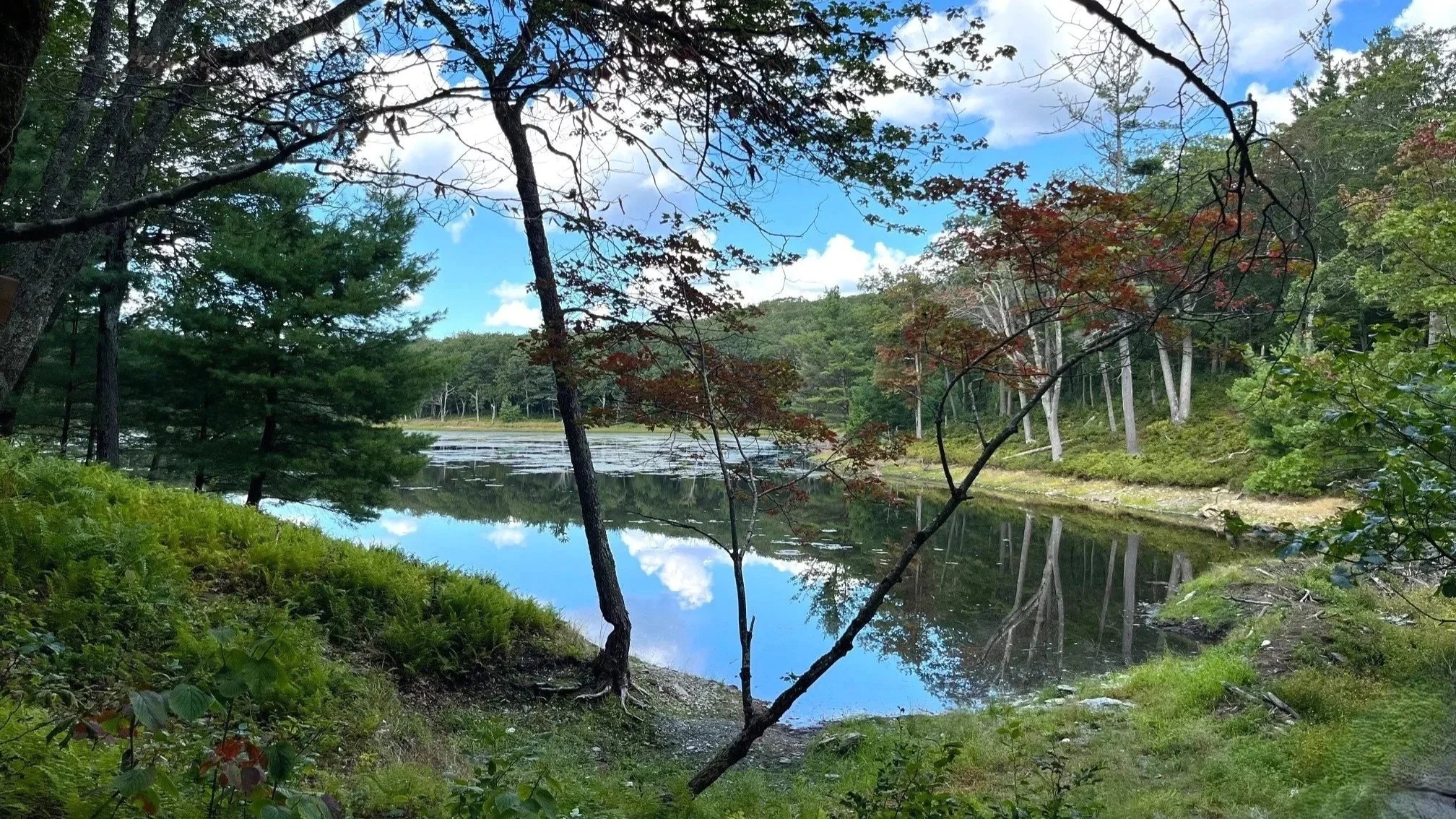
Tilden Swamp, Pittsfield State Forest, pic by M Waldman
FALL LUNCHEON: Join us at the annual Fall Luncheon! See old friends, make new friends, enjoy a nice meal and an interesting presentation on the Deadly World of Raptors in our area!
• Where and when: Moscatiello’s Italian Restaurant, 99 North Greenbush Rd (Rte. 4), Troy, on Sunday, November 8, 12:00 to 3:00 PM

• Cost: $25 per person. The Club partly subsidizes the meal.
• Meal: The buffet includes salad, rolls, penne marinara, meatballs & sausage, and eggplant parmigiana, followed by mini cannoli.
• Meeting & Speaker: After the meal we will have a brief business meeting followed by our feature presentation.
Speaker: Samantha Carouso-Peck, Head Ornithologist and Educator, Grassland Bird Trust
Presentation: The Deadly World of Raptors: Secrets of the New York Grasslands
Forget everything you thought you knew about birds of prey - some of the most unusual, ingenious, and beautiful raptors live right here on the grasslands of Upstate New York. Meet the owl who hunts during the day, nests on the ground, and has the most peculiar courtship display. Learn about the hawk who hunts like a ghost, dances in the sky, and keeps a harem of females. See the world through the eyes of a tiny falcon who hovers like a helicopter, feasts on bugs, and can see in colors beyond human perception. Join Dr. Samantha Carouso-Peck for a fascinating inside look at the secretive lives of the birds of prey in our backyard.
Reservations: Use this link to pay online, via this website. Or you can mail your $25 check made out to “Taconic Hiking Club”, to: Taconic Hiking Club, c/o Margaret Parks, 9 Tokay Lane, Schenectady, NY 12309. (You may also use a link on the Outings page, Luncheon posting, to pay online.)
Due Date: Tuesday, November 3.
NUTS ABOUT FALL: THE AMERICAN CHESTNUT (Castanea Dentata)
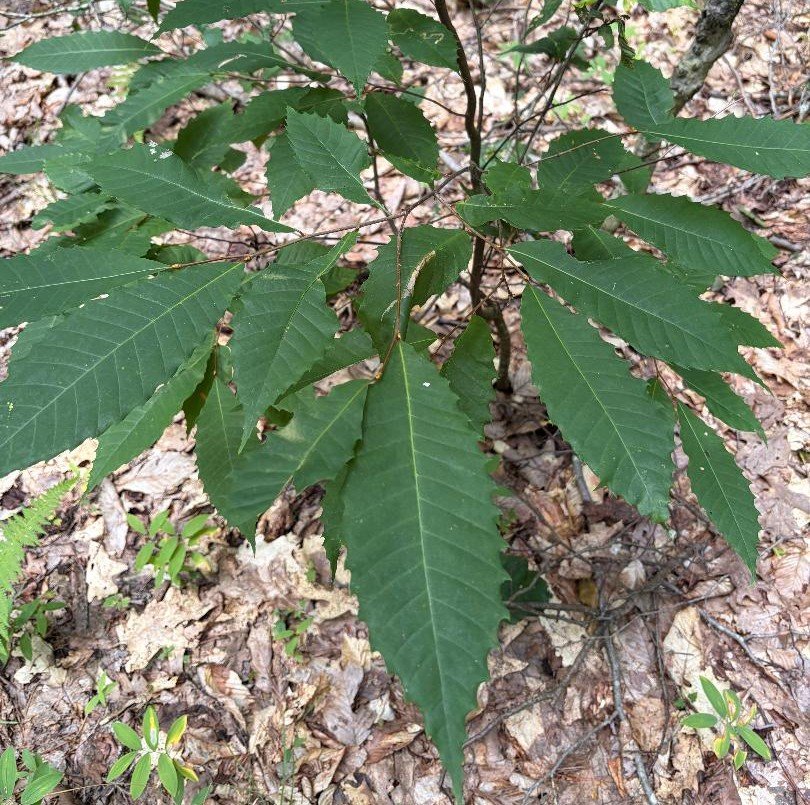
American chestnut leaves, pic by M Waldman
As we celebrate the country’s 250 anniversary, it’s worth remembering the significant role this tree had in the nation’s economy. It was with good reason that the American chestnut was described as the “cradle to grave” tree. This relative of the beech had an open-grained wood similar in appearance to oak. Given its strength and great resistance to rot, it found favor as an ideal material for buildings as well as furniture. Indeed, the chestnut was so common that it was considered a secondary wood, one that was often used as an inexpensive base for veneers of more expensive woods such as rosewood. According to Eric Rutkow in American Canopy, the chestnut was so common and so desirable that it was used extensively as railroad ties. Fortunately, you can still find structures built of chestnut at the Appalachian Club’s Ponkapoag Camp near Boston, Massachusetts. This, of course, was in addition to its role as a food source, as everyone will recall from the lyrics of that Christmas tune: “Chestnuts roasting on an open fire.”
So, what happened to the American chestnut? In 1904 a fungus was discovered to be infecting chestnut trees, a blight so virulent that it quickly girdled the tree’s bark and effectively destroyed its circulatory system. Asian in origin, the fungus was probably introduced in America in the late nineteenth century from imported nursery plants. By the middle of the twentieth century, the fungus had spread over 200 million acres and destroyed some three to four billion trees. Appalachia was especially hard hit.
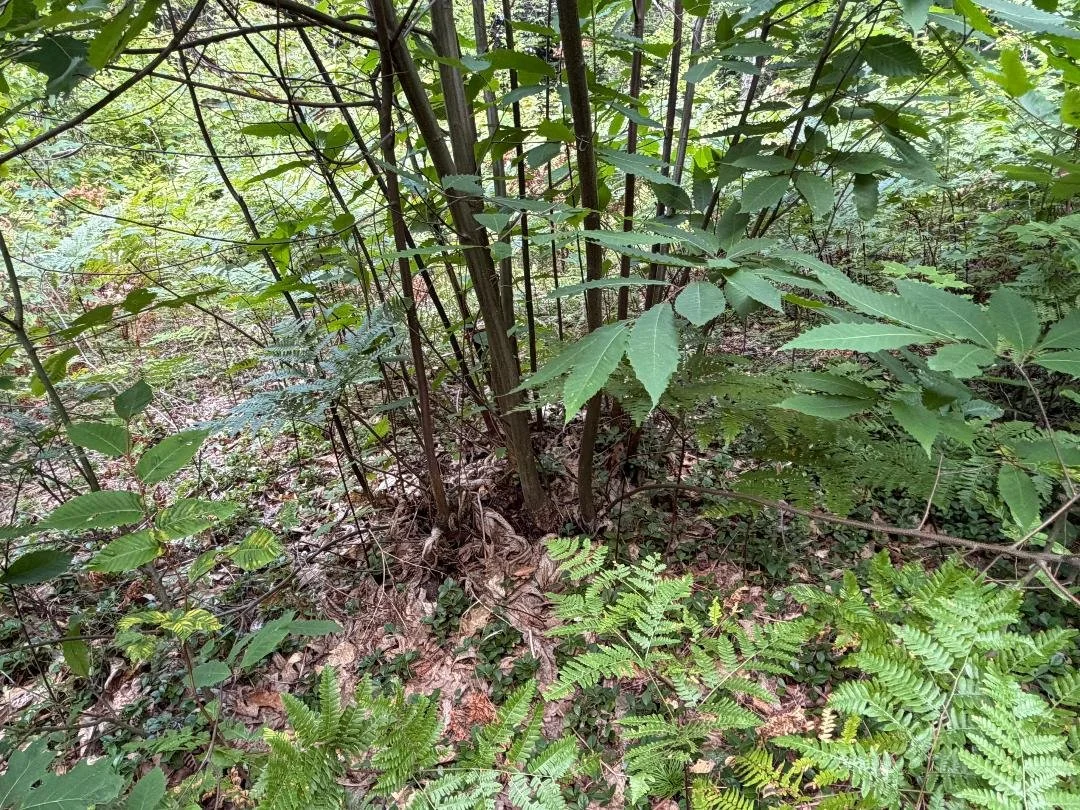
American Chestnut sprouted from stump
The American chestnut still exists as mature trees in small numbers in isolated pockets, but it is no longer a significant presence in the forest canopy. According to Rutkow: “When every mature tree had fallen, all that remained were the ever-present stump sprouts . . . [It] became, in effect, an understory shrub.” It was in this form that I first encountered the American chestnut some twenty years ago on an evening walk with a group on the grounds at the Albany Shaker site. The leader of our group, a retired DEC administrator, pointed out the stump from which a few slim stalks protruded with their characteristic long leaves and sawtooth edges. You can see much better examples of the species on the Shaker Holy Mountain across from Hancock Shaker Village. The chestnuts, some of which are 10 to 14 feet tall, are just off the trail and near the fenced area close to the top. As you can see from one of the photos, the ring of chestnut saplings represents growth from the surviving stump.
What does the future hold for the chestnut? Researchers continue to search for ways to develop trees that are resistant to the fungus, and there is an impressive test plot of chestnuts in Vermont’s Merck Forest. Perhaps this canopy denizen can find its way back into American woodlands. Now that would be worth a celebration! Submitted by Cliff Prewencki.
NOMINEES for the 2027/28 THC Board: Election be held during the THC annual luncheon.
President - Martha Waldman
Vice President - Karen Ross
Treasurer - Leslie Siegard
Secretary – Michelle Filiault
Volunteers continuing their Coordinator roles for 2027/28 include: Trails - Dave Pisaneschi, Membership - Sue Jordan, and Social - Margaret Parks
HUNTING SEASON IS HERE! Time to start wearing your blaze orange or fluorescent pink vest, hat, or other articles of clothing while you are out hiking. It is recommended that stay on well-used trails when hiking and postponing bushwhacking during hunting season. Let the hunters enjoy their limited time in the woods.
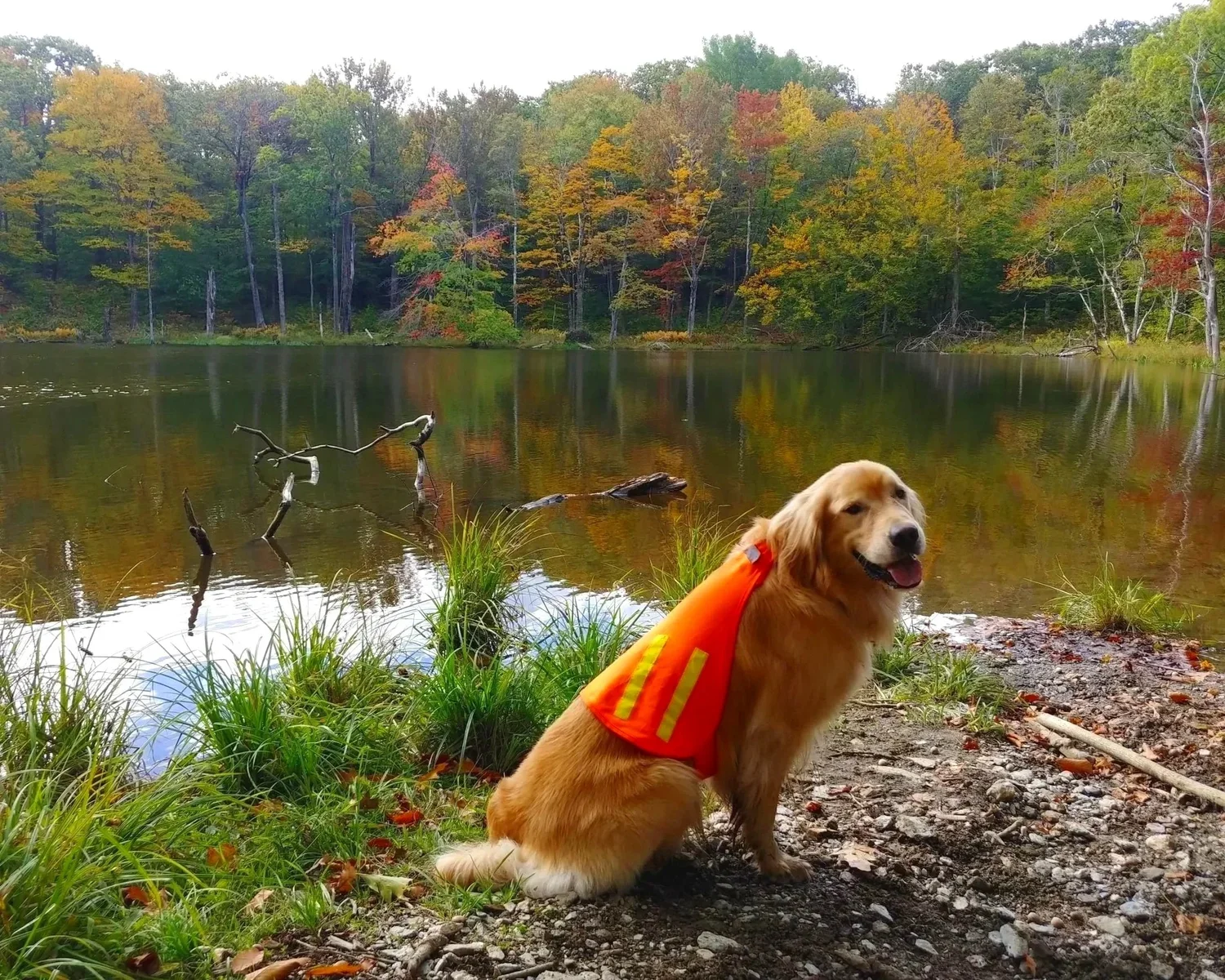
Don’t forget to put some blaze orange on your dog too! Pic by K Ross.
You can find specifics on hunting for your region, seasons for specific game, and which firearms are allowed for which game and when on the links below.
NYS: NYSDEC 2026-2027 Hunting Seasons
MA: MA Hunting Seasons, 2026- 2027
The good news for hikers is Massachusetts still does not allow any hunting on Sundays.
For hikers, the season to pay extra attention to is the regular deer season. This year, deer hunting season with rifles in the southern region of NYS runs from November 21 through December 13. In the western region of MA shotgun season for deer is November 30 through December 12. Vermont has an earlier regular deer season of November 14 thru 29.
OUTINGS: Refer to the THC website outings page for details about the outings and how to register. We schedule on a monthly and short-term basis, so check the website periodically.
Tuesday, October 6: Harding Rd Trail – Palenville B
Friday, October 9-- Taconic Crest Trail work - Pittsfield State Forest
Tuesday, October 13 Boehme Legacy Forest C
Wednesday, October 14: Lulu Brook or Turner to Parker Brook Loop Hike - Pittsfield State Forest B
Friday, October 16: Hunter Mountain Traverse A
Wednesday, October 21: Stony Ledge via Haley Farm Trail, B+
Monday, October 26: Blackhead Range Traverse A
Friday October 30: Prospect Mountain – Lake George B
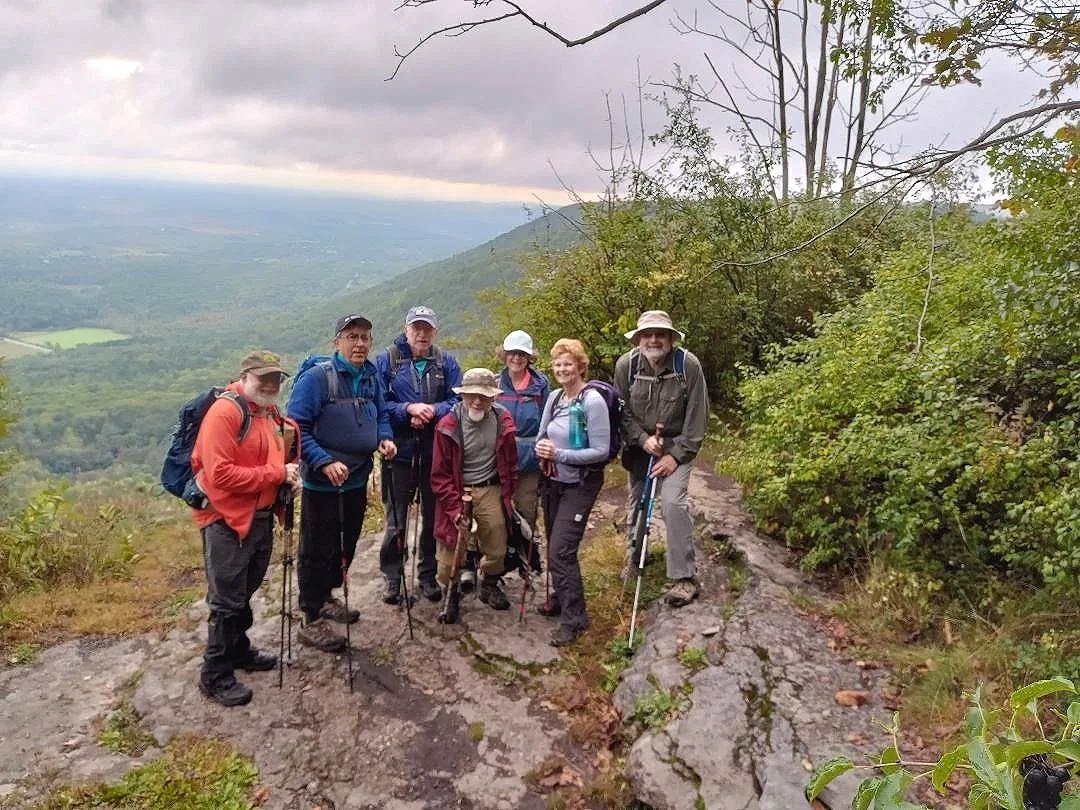
High Point _ Thacher Park, pic by B Lampman
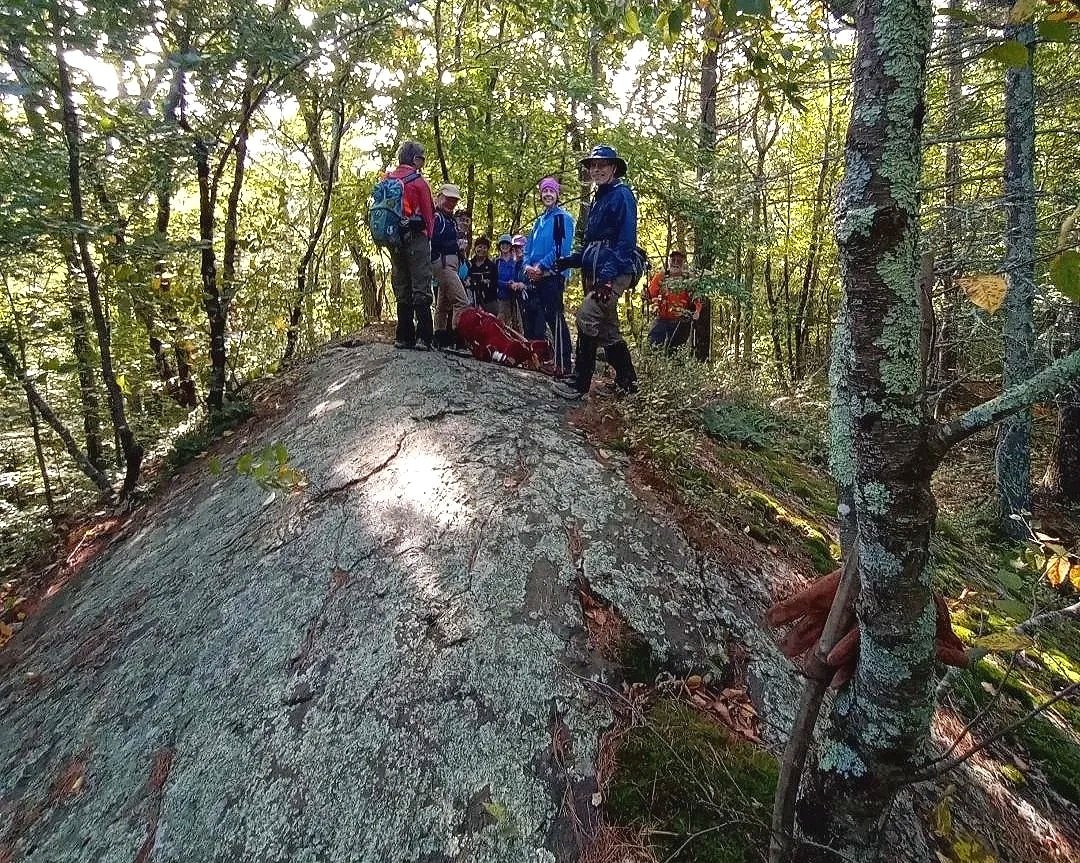
Whale Rock, Thomas & Palmer Reserve, pic by B Lampman
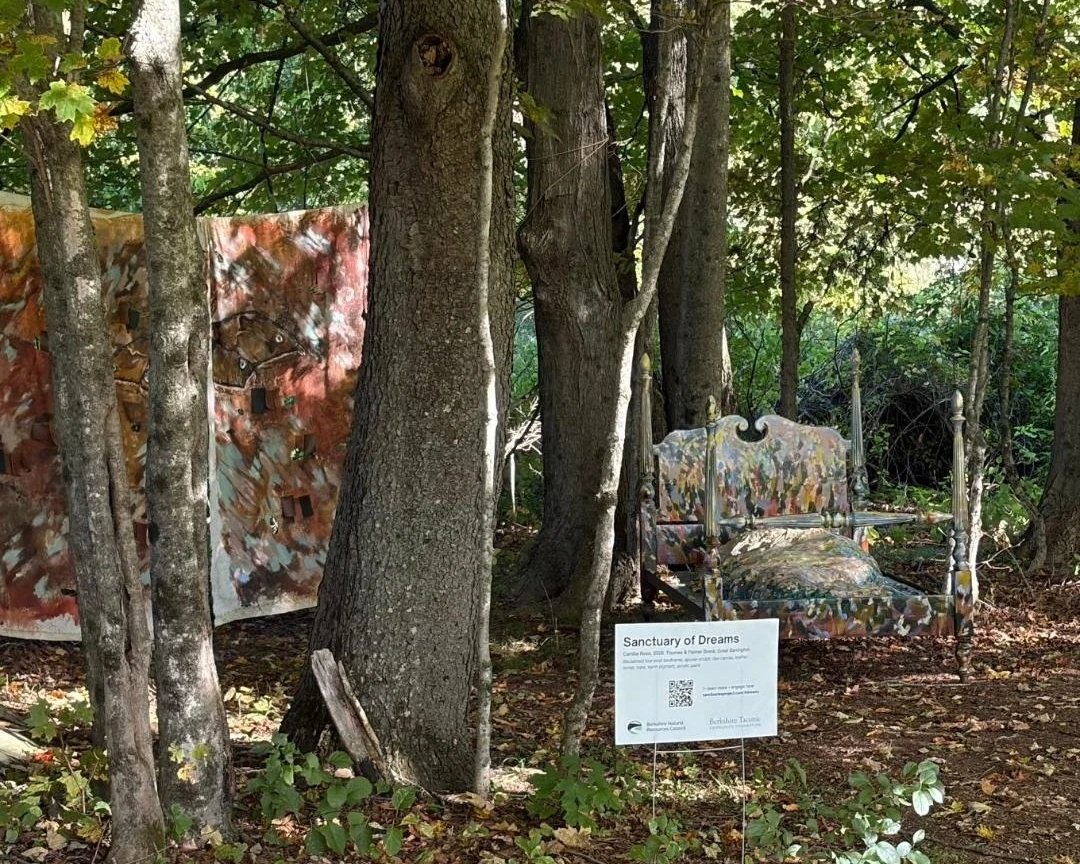
Forest art, Thomas & Palmer Reserve, pic by M Waldman