August Newsletter 2026
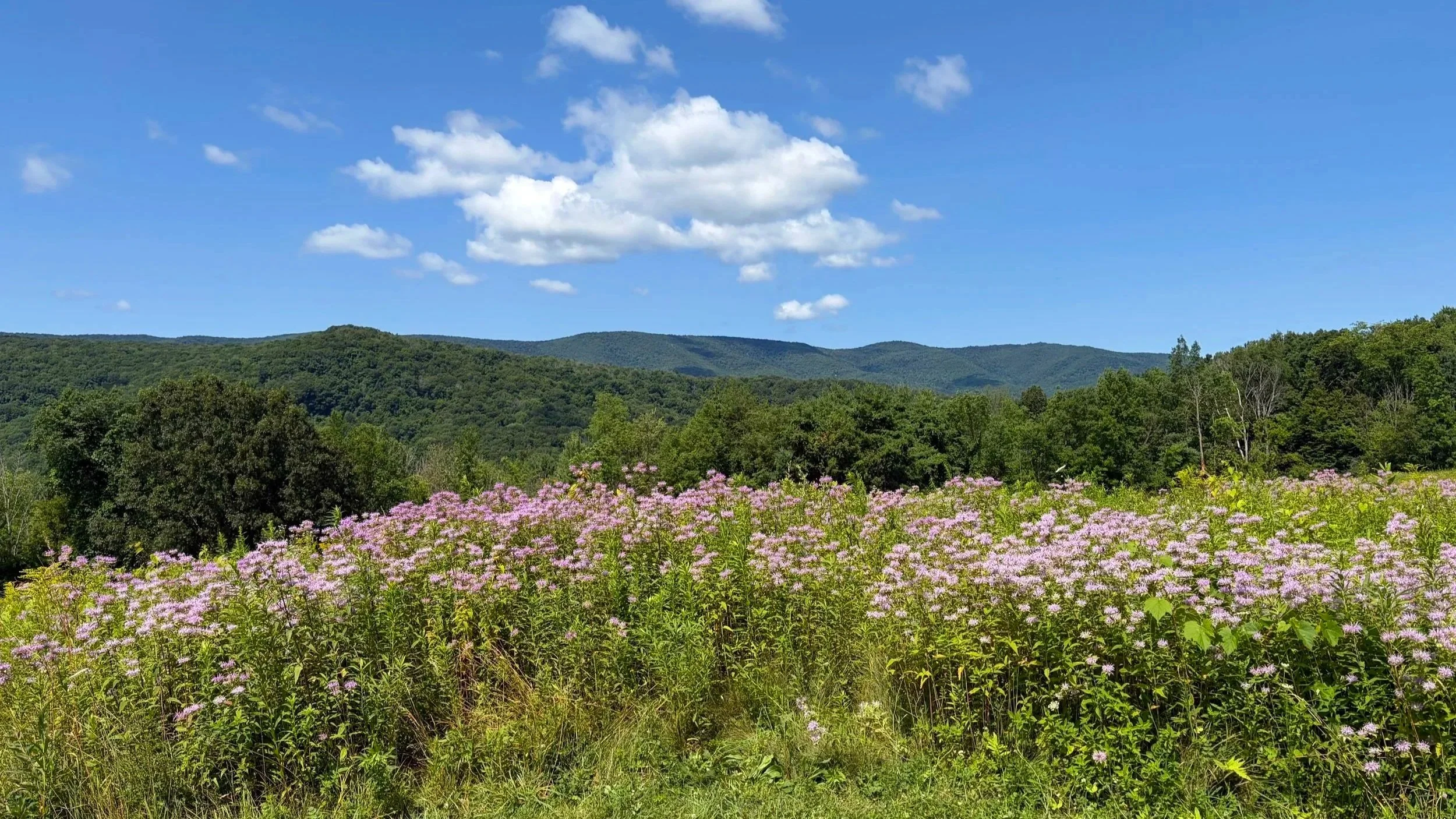
View towards Taconic Crest from Mountain Meadow Preserve, meadow viewpoint. Pic by M Waldman
NORTHEASTERN SNAKES
The northeastern United States is home to a diverse group of snakes that live in forests, wetlands, fields, rocky hillsides, farms, gardens, and suburban edges. Most are nonvenomous and beneficial, helping control rodents, insects, slugs, amphibians, and other small animals. In New York, for example, wildlife agencies recognize 17 native snake species, only three of which are venomous. Across much of the Northeast, everyday encounters are far more likely to involve garter snakes, water snakes, milk snakes, rat snakes, racers, brown snakes, or ring-necked snakes than a venomous species.
Hikers love talking about their adventures on summits and trails and often the conversation can pivot to stories about encounters with snakes. Most have come across big ones and little ones, and in many cases have run into rattlesnakes or copperheads. Hikers around Lake George often find rattlers stretched across a trail, and hikers in the South Taconics tread lightly over the narrow trails whose vegetated sides can hide a rattler or two. And some tell the story of sitting down for lunch on a ledge in the Gunks only to find that the space below where they had laid their poles and backpacks was filled with copperheads. Or there’s the biker (in Florida) on a rail trail who ran over a snake that got caught in the wheel and spun around and bit her—and it was poisonous and luckily she survived. But that’s not as terrifying as the Northwest Bay paddler who reported being chased in the water and up onto a rock by an aggressive rattler, requiring defensive moves with a kayak paddle. Yes, most snakes can swim in case you didn’t know. But what else should you know about the snakes you might encounter in the woods? Read on.
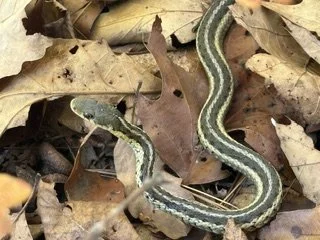
Garter snake - pic by Brad Schwebler
Common Northeastern Snake Groups
Garter snakes: Usually dark green, brown, or black with yellowish stripes; common in yards, fields, wetlands, and woodland edges.
Northern water snakes: Heavy-bodied, often found near ponds, lakes, streams, and marshes; juveniles may show strong banding, while adults may look dark or nearly solid-colored.
Eastern milk snakes: Light gray or tan with reddish-brown blotches bordered in darker color; often found near barns, stone walls, and fields.
Black rat snakes and racers: Larger, dark snakes that may be seen in forests, farms, and rocky areas; rat snakes are excellent climbers and important rodent predators.
Brownsnakes, red-bellied snakes, ring-necked snakes, and worm snakes: Small, secretive snakes that often hide under logs, leaves, rocks, mulch, or garden debris.
Hognose snakes: Stocky snakes with an upturned snout; may flatten the head, hiss, or play dead when threatened, but are generally harmless to people.
Venomous Snakes in the Northeast
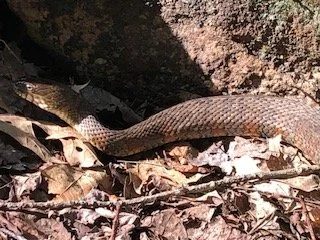
Common water snake - pic by Brad Schwebler
The main venomous snakes in the Northeast are pit vipers: the northern copperhead and timber rattlesnake, they are not evenly distributed and are often restricted to specific rocky, forested, wetland, or protected habitats. Hikers most frequently encounter them in the Tongue Mountain Range and around Lake George and in the South Taconics in Massachusetts, for example on Alander, Brace, Frisell and Race Mountain.
Northern copperhead: Coppery head; tan to pinkish-brown body; dark hourglass-shaped crossbands; heavy body; no rattle.
Timber rattlesnake: Large, heavy-bodied snake; dark bands or chevrons on gray, yellowish, brown, or nearly black background; rattle at tail tip.
Identification Guide: What to Observe from a Safe Distance
Location and habitat: Note whether the snake is in water, on rocks, in a meadow, near a barn, in leaf litter, or crossing a trail.
Overall body shape: Is it slender, heavy-bodied, short, long, smooth-looking, or rough-scaled?
Color and pattern: Look for stripes, bands, blotches, hourglass shapes, chevrons, rings, or a mostly solid color.
Tail features: A visible rattle strongly suggests a rattlesnake, but never assume a snake is harmless just because it does not rattle.
Behavior: Freezing, fleeing, tail-vibrating, flattening the head, or hissing are defensive behaviors and do not automatically mean the snake is venomous.
Photograph safely: If identification is needed, take a photo from a distance using zoom rather than approaching.
How to Stay Safe When Encountering a Snake
Stay calm and stop moving. Most snakes are not aggressive and prefer to escape.
Back away slowly. Give the snake room and avoid sudden movements.
Do not touch, pick up, corner, or kill the snake. Many bites happen when people try to handle or harm snakes.
Watch where you step and place your hands. Use extra caution around rocks, logs, brush piles, stone walls, tall grass, woodpiles, and leaf litter.
Keep pets away. Put dogs on a leash and prevent them from sniffing or pawing at snakes.
Wear protective clothing outdoors. Boots and long pants reduce risk when hiking, gardening, clearing brush, or working near dense cover.
If Someone Is Bitten
Call 911 or seek emergency medical care immediately. Treat any unknown snakebite seriously.
Move away from the snake. Do not try to capture or kill it; a photo from a safe distance may help, but only if it does not delay care.
Keep the bitten person calm and still. Limit movement of the affected limb.
Remove rings, watches, bracelets, or tight clothing near the bite before swelling begins.
Do not cut the wound, suck out venom, apply ice, use a tourniquet, or drink alcohol. These actions can worsen injury or delay proper treatment.
Note the time of the bite and monitor symptoms such as swelling, pain, discoloration, nausea, weakness, dizziness, or trouble breathing.
Snakes are an important part of northeastern ecosystems, controlling rodent and insect populatons, and are usually more interested in avoiding people than confronting them. The safest approach is to learn the common species in your area, observe from a distance, avoid handling all wild snakes, and treat any uncertain identification with caution. And of course, share the story with friends.
ANNUAL LUNCHEON – Sunday, November 8:
Save the date! The Annual Luncheon will be Sunday, November 8, 2026, starting at noon, at Moscatiello’s Italian Family Restaurant on 99 North Greenbush Rd (Rte. 4) in Troy. See old friends and make new friends!
Details about the buffet luncheon menu, speaker, and registration information will be posted in the September Newsletter as well as the THC website Outings page.
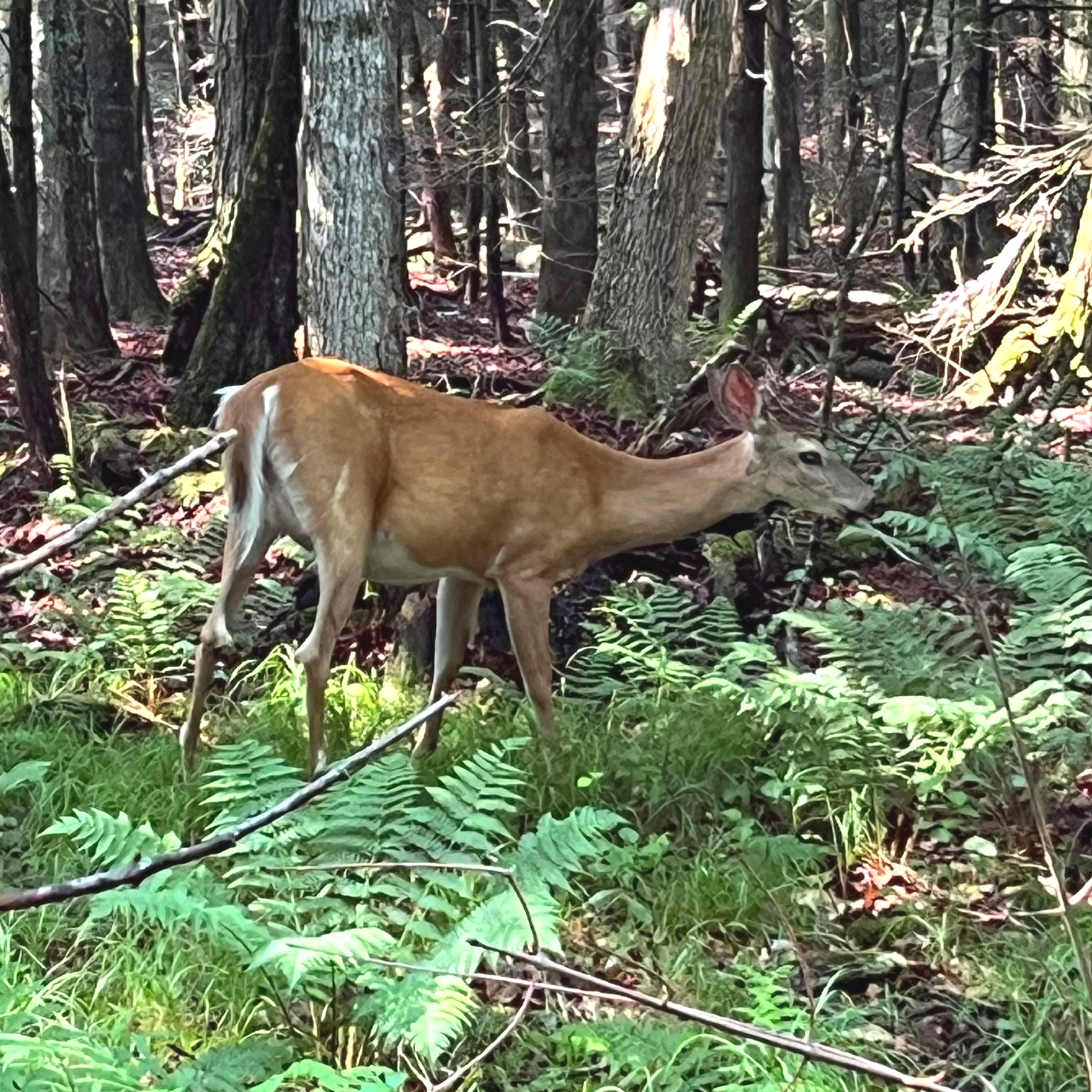
OUTINGS: Refer to the THC website outings page for details about the outings and how to register. We schedule on a monthly and short-term basis, so check the website periodically.
Wednesday, August 12: Poestenkill Community Forest B-
Wednesday, August 12: Ashuwillticook Rail Trail, Adams to Pittsfield - RT, c. 24 miles B
Tuesday August 18, Harlem Valley Rail Trail Bike - Millerton to Wassaic RT B
Thursday August 20: Williamstown Rural Lands, Williamstown MA C+
Monday, August 24: Harlem Valley Rail Trail - Copake to Millerton RT c. 24 miles B
Wednesday, August 26: Clam River Reserve, Sandisfield B-
QUOTE: “When summer opens, I see how fast it matures, and fear it will be short; but after the heats of July and August, I am reconciled, like one who has had his swing, to the cool of autumn.” – Ralph Waldo Emerson
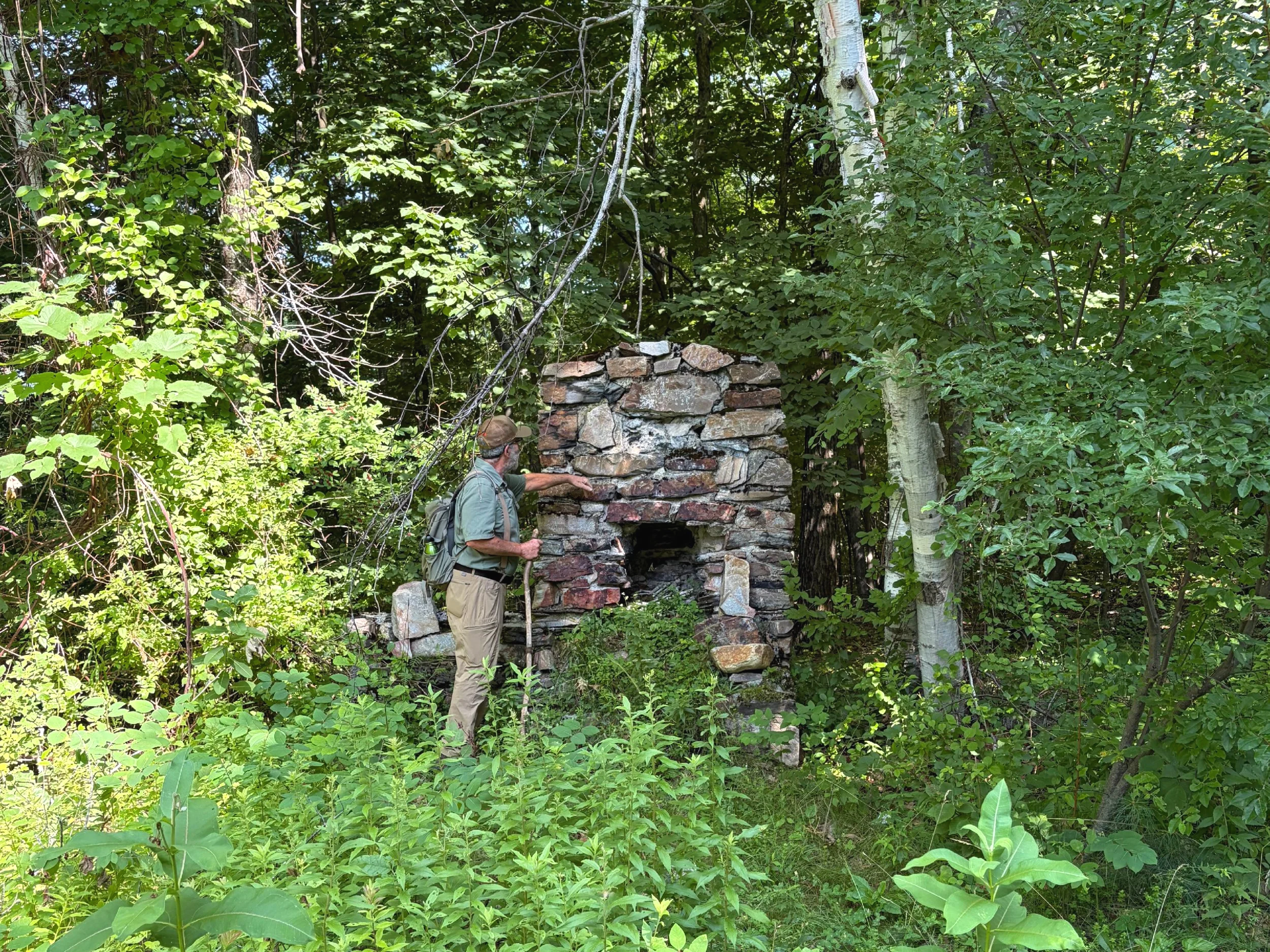
Remains of old camp at Mountain Meadow preserve, pic by M Waldman
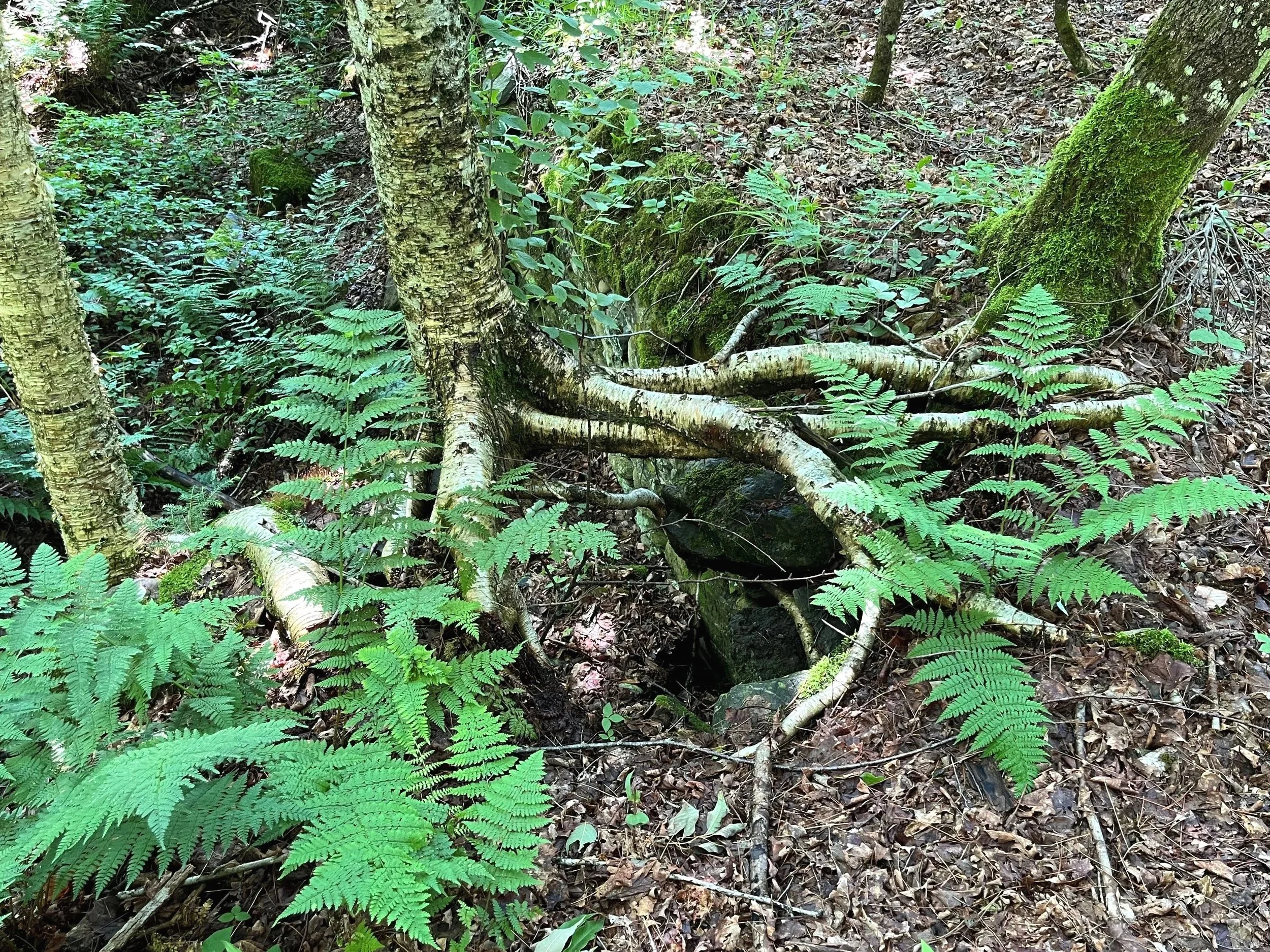
Tree suspended over old foundation, Capital District Wildlife Area
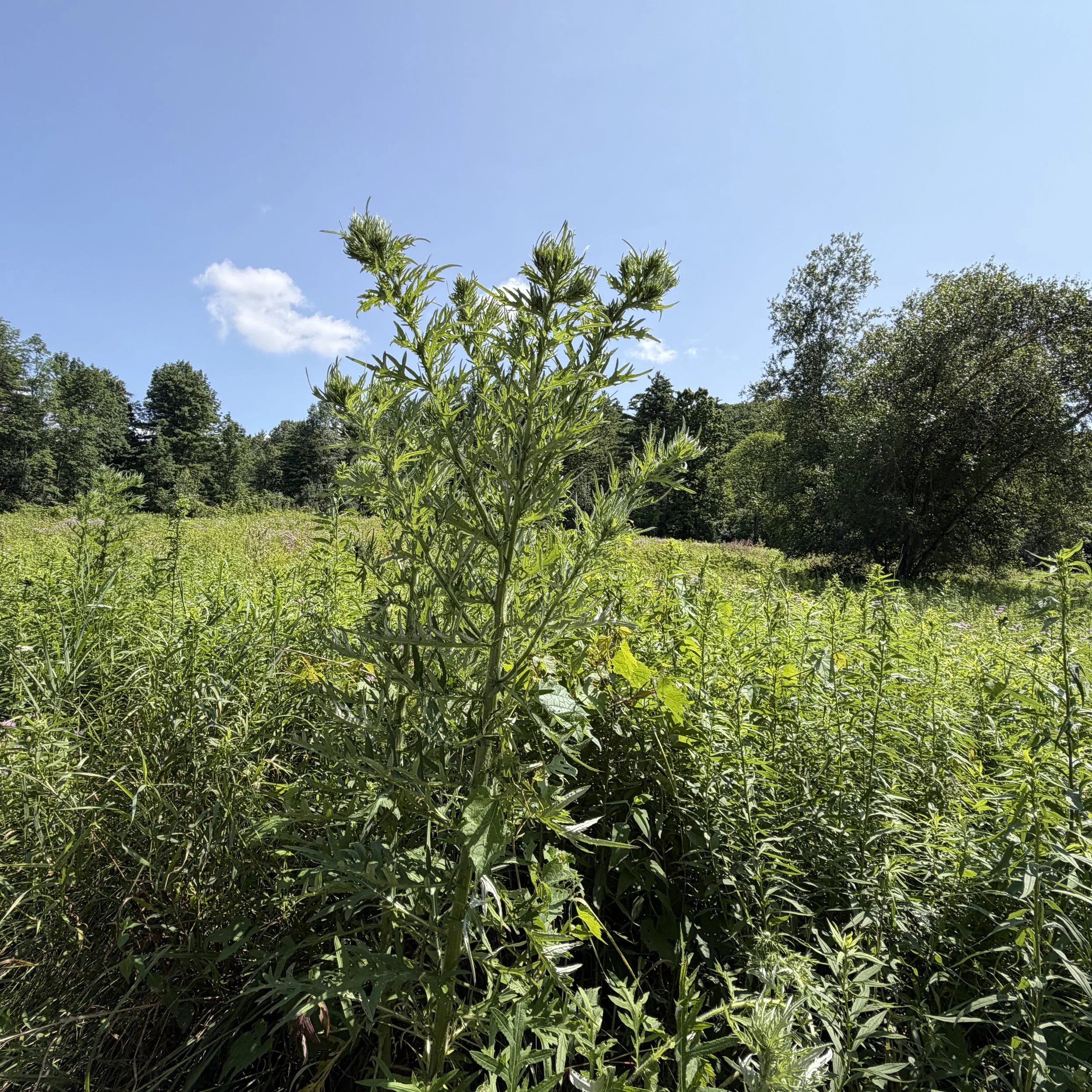
Six+ foot thistle, Mountain Meadow Preserve, pic by M Waldman
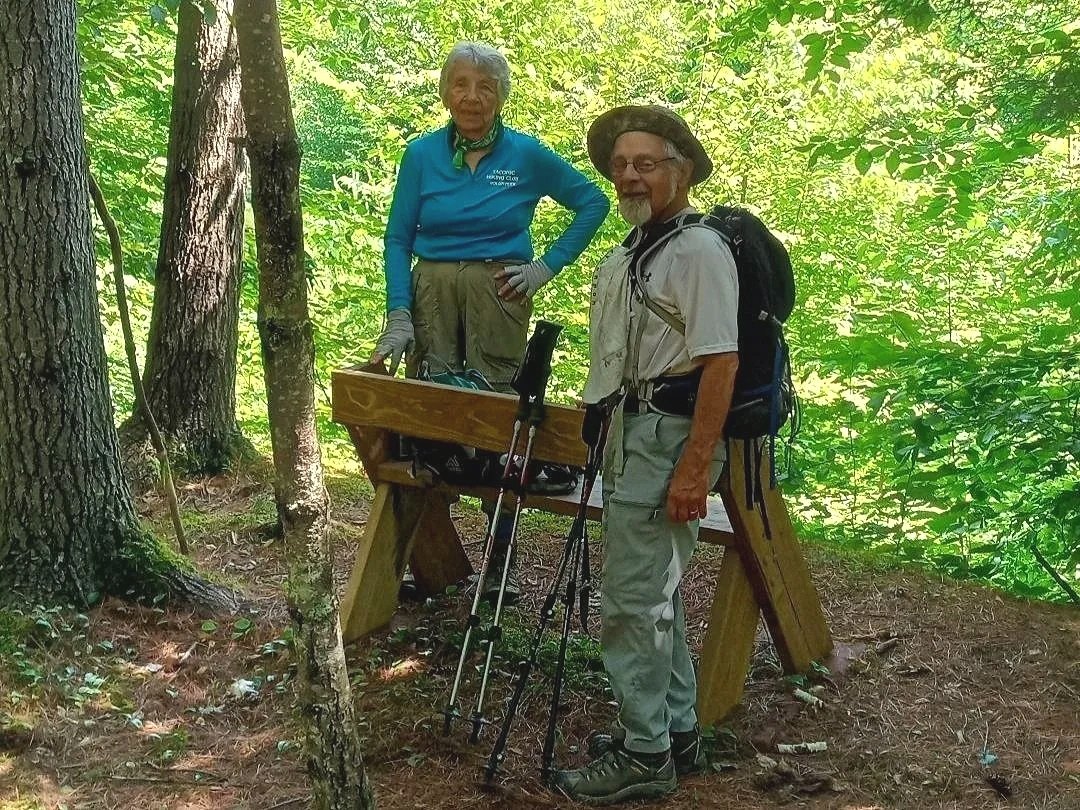
Dill Brook Community Forest, pic by B Lampman
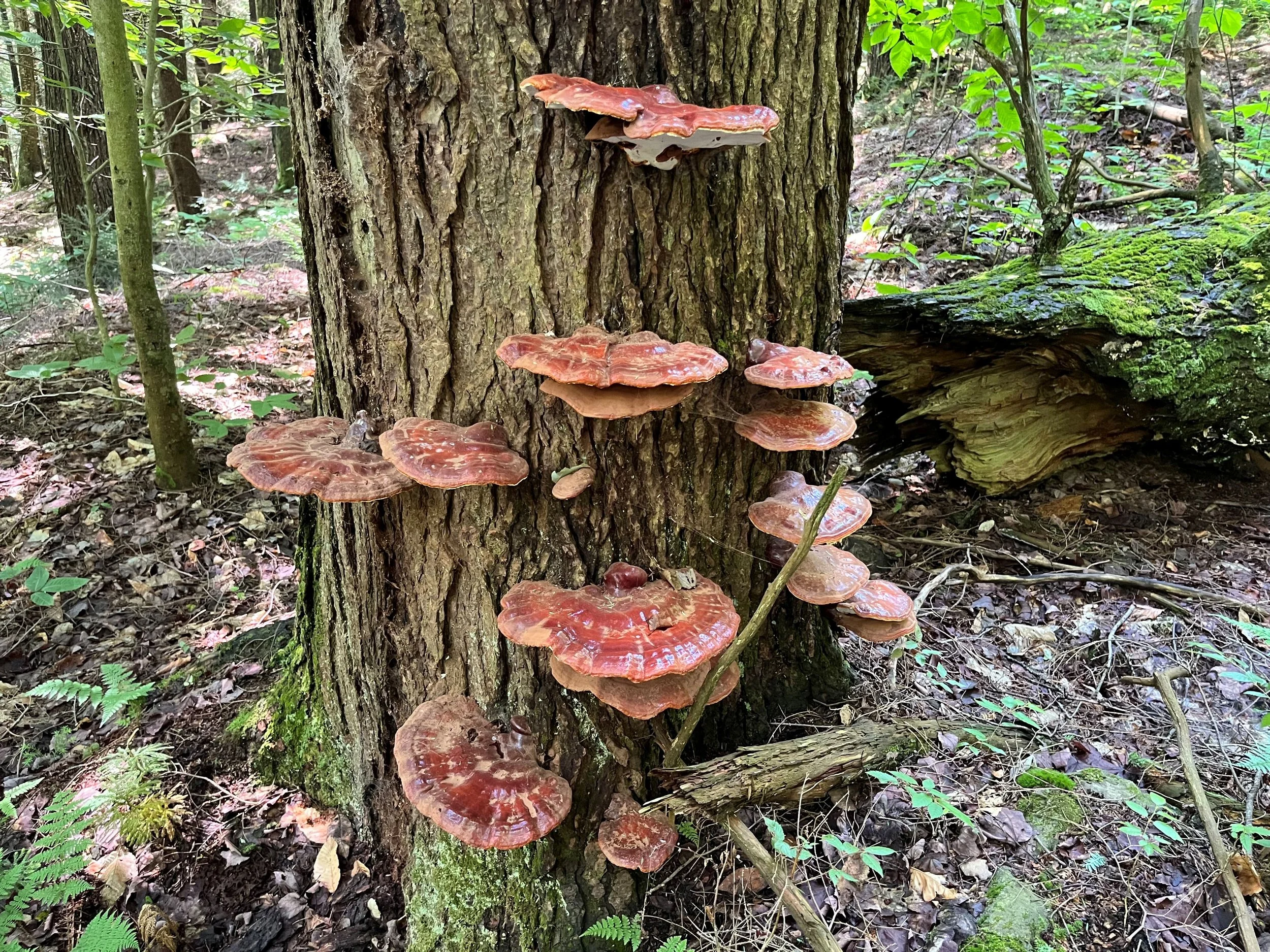
Capital District Wildlife Area, pic by M Waldman
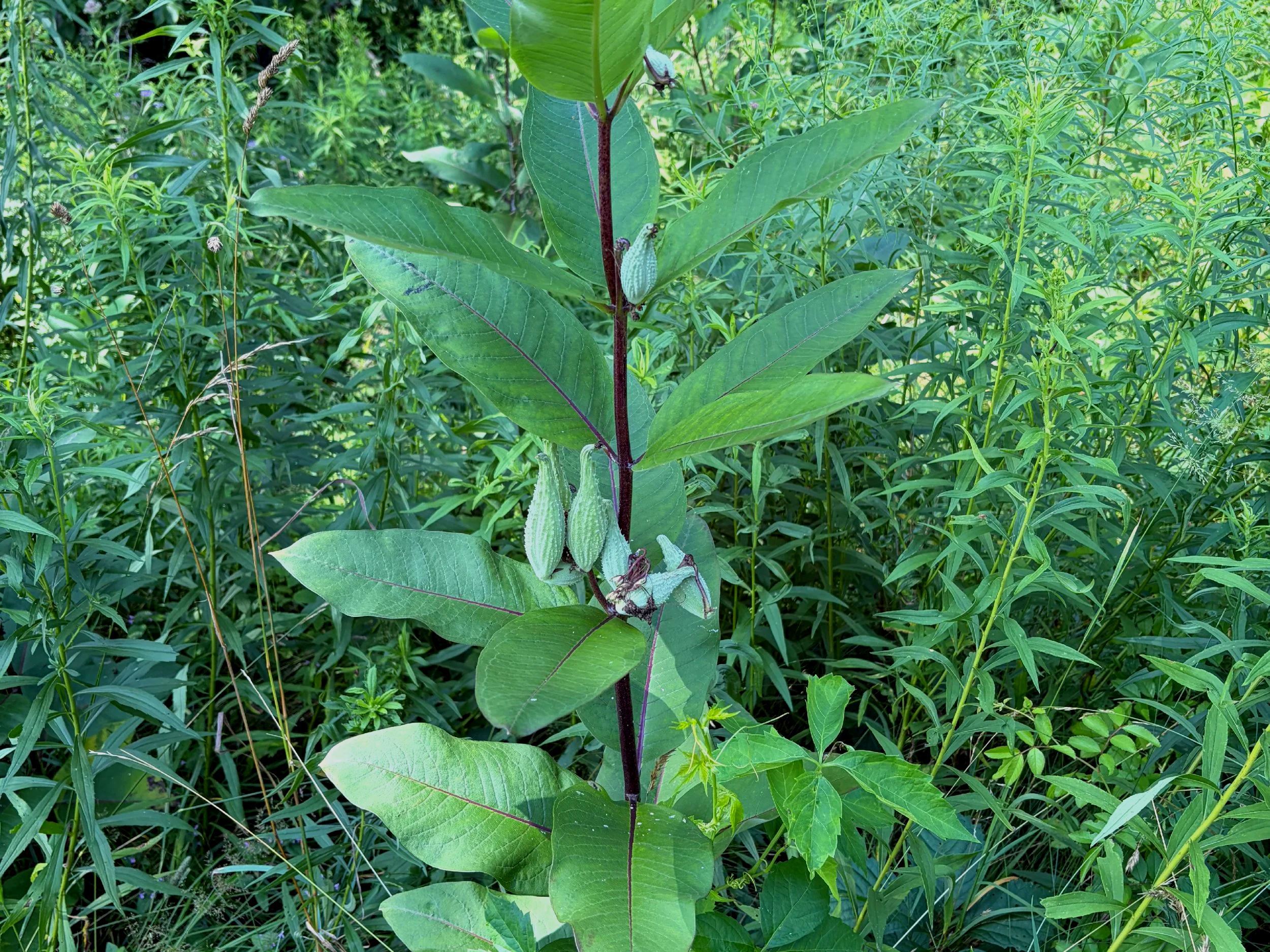
Milk weed, Mountain Meadow Preserve, pic by M Waldman