March Newsletter 2026
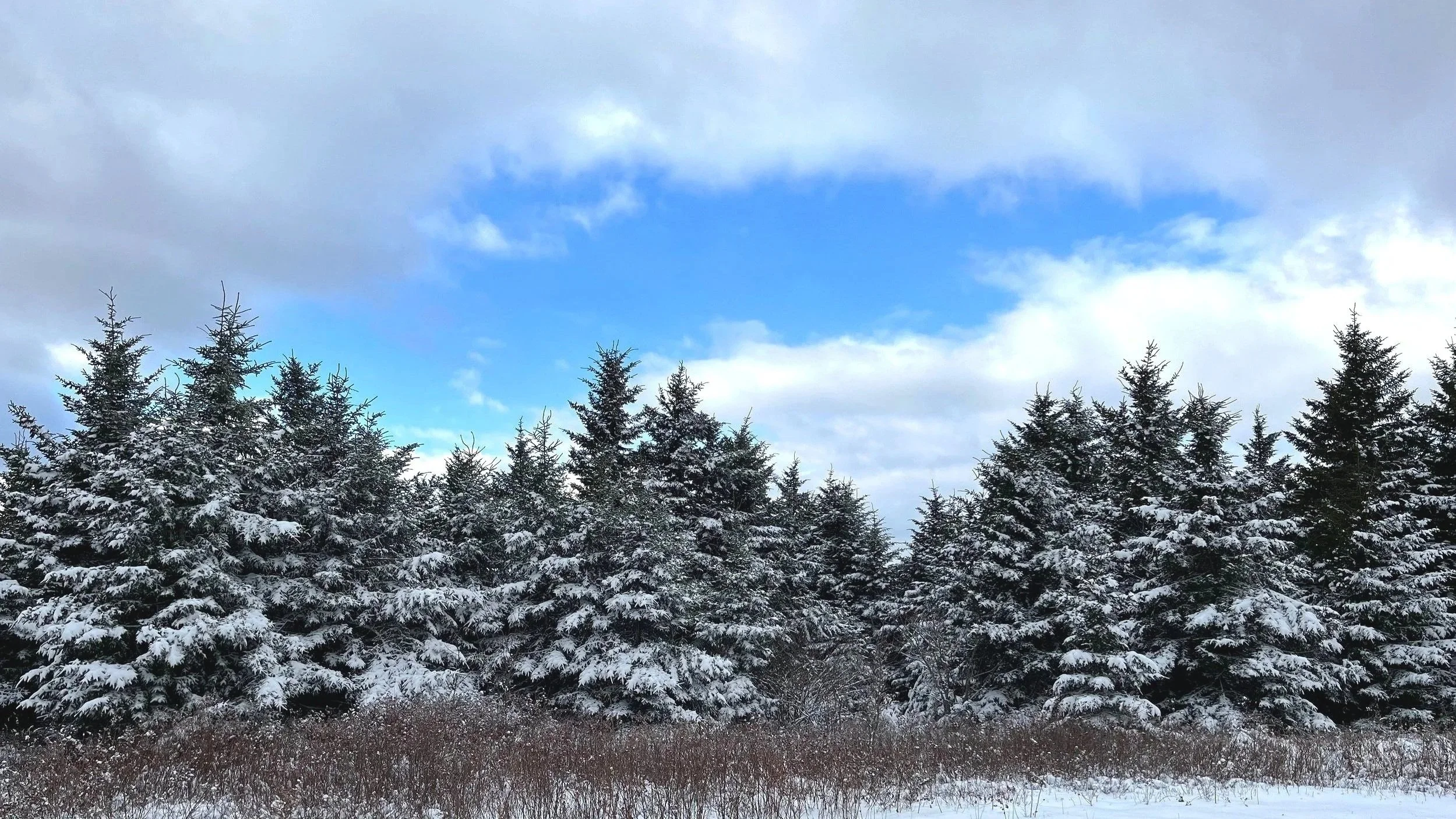
Berlin summit, pic by M Waldman
End-to-End Challenge One Day Patch
END-TO-END CHALLENGE REGISTRATION: Registration for the May 9, 2026, End-to-End Challenge opens March 1, 2026 at 7 AM. The online link to registration via Eventbrite is on the THC End-to-End Challenge page. Set your alarm clock!
Participants will hike 30+ miles, with over 7000 feet of cumulative elevation gain over undulating terrain, on the Taconic Crest Trail from Berry Pond in Pittsfield State Forest to the northern end of the Taconic Crest Trail at Route 346 in one day. Obviously, this challenge is for very fit and experienced hikers! Hikers are supported from beginning to end by volunteers of the Taconic Hiking Club. See the End-to-End Challenge page of the THC website for more details.
Volunteer opportunities include trail work, carrying water up Mattison Hollow for the hikers a day or two before the Challenge, being a sweep, shuttle driver, volunteering at the check points at Petersburg Pass and the Rte. 346 end of the trail. To volunteer email: taconichikingclb@gmail.com (no “u” in club.)
Backcountry Skiing—What is it, Where to go, and What Equipment to use
If you’re a skier, then this is your year. It’s a winter skiers dream about. Maybe you’d like to expand your repertoire of activities and consider BACKCOUNTRY SKIING!
Backcountry skiing has surged in popularity as commercial downhill areas become overcrowded and often overgroomed. Why not have more fun on your own and enjoy quieter “backcountry” trails where you can challenge yourself with vertical and distance goals—or just revel in a silent snowy glide through the forest? You can ski well-known routes, or for the very fit and rugged, discover new areas to explore on skis. You might want to keep these latter routes to yourself as a personal “cache” so they remain untracked and so smaller parking areas stay available.
Definitions:
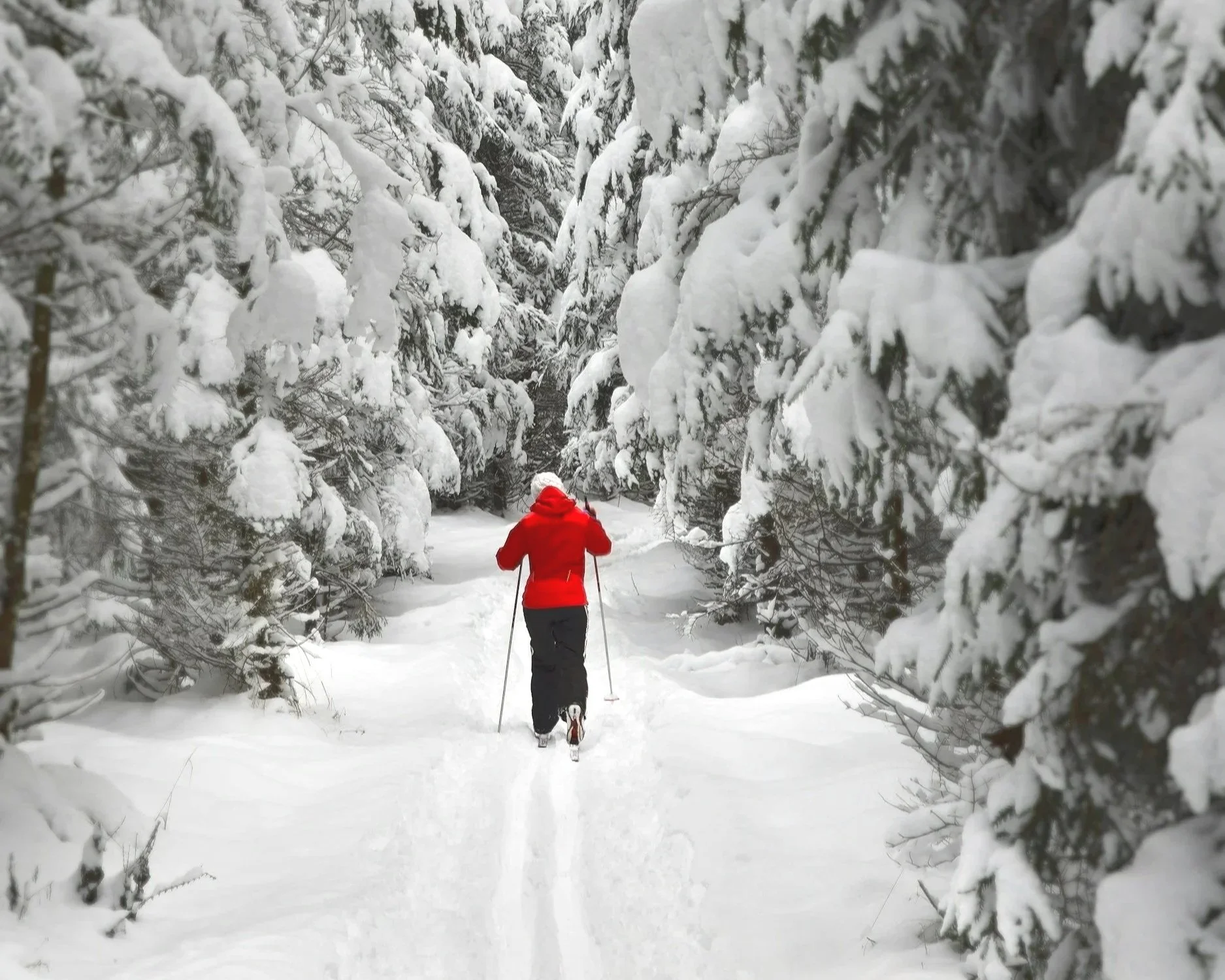
Back country skiing is defined a bit loosely by participants. For some, it includes skinning up any peak or slope (like Jiminy) and skiing back down. Others say if that is at a commercial ski area, it’s not backcountry skiing. Some say there has to be a vertical component (as with the unmanaged trail down Greylock’s Thunderbolt); others say just being on any kind of skis in unmanaged woods is back country skiing, and that could include being off trail or on mapped trails. Telemark skiing is one type of backcountry skiing, though it requires more rugged and expensive equipment, approaching the level of alpine skiing. One thing is for sure—you aren’t “backcountry skiing” if you take the chairlift up and use alpine equipment to ski down. You probably also have to get into the woods.
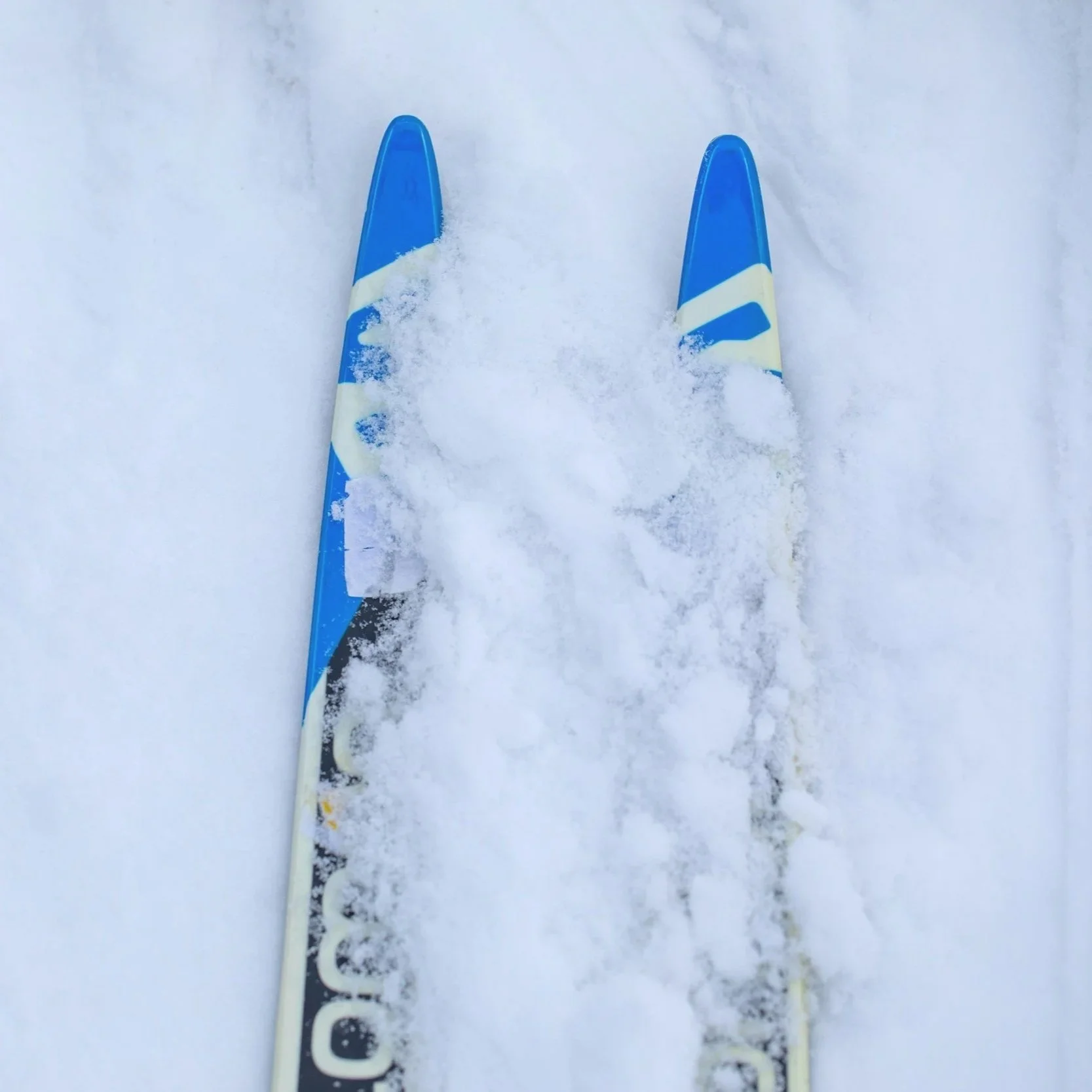
And what are skins? Skins are used to grip the snow so that the skier can push forwards and either glide along the track or climb without slipping backwards. They are made out of mohair or nylon material and are positioned on the ski base, directly underneath the bindings in an area called the “kick zone” as the skins provide grip to kick against.
SkiMo, the newest Olympics skiing event, involves skinning up a mountain and skiing down, with incredibly fast turnaround times for putting on and taking off the skins. As it is on groomed slopes and uses narrow, skate skis, it is not actually backcountry skiing. It is still very impressive and an incredible feat!
Equipment:
There’s a wide spectrum of gear available, and most backcountry enthusiasts have an array of ski and binding types to choose from depending on terrain and conditions. You can choose skis like these:
Powder skis with backcountry binding
Metal-edged wider cross country skis like Fischer S-Bounds 98s, maybe with a little rocker and sidecut
"All Mountain," "hybrid," or "All Terrain (AT)" skis for use at resorts with groomed slopes and managed glades. As they do not have camber for kick and glide, they are best used for skinning up mountains and skiing down through the slopes or glades rather than touring on flat or rolling terrain.
You can pair them with bindings and boot options like these:
3-pin bindings with an old-school telemark cable that goes around your boot for telemark skiing in deeper snow
Most bindings use the traditional AT (Alpine Touring) bindings, also called Hybrid or All Mountain, where the 75 mm design is normal. The "duck bill, or the part that sticks out in front of the boot, is 75 mm wide, with 3 holes to match the pins in the binding. This makes a very strong, durable connection that has great efficiency in turning the ski and gives stability and support on changeable terrain and steep slopes.
For less steep and winding terrain and for the less aggressive skier, the NNN BC bindings and boots that came out in the 90's are very good and reliable. Companies that still produce these more affordable backcountry boots and bindings are Rottefella with their Xplore and Pioneer models, Fisher with their BCX Traverse, Rossignol with the Pioneer or Xplore XP12, Madshus’ Panorama Explorer and Crispi. Do your research here!
The New Telemark Norm (NTN) systems, which are very heavy duty, as well as heavier, are very expensive but secure the skier at the toe and midsole for better control and responsiveness for aggressive skiing
Keep in mind that telemark boots alone can start at $700!
Where to go:
Capital Region:
The good news is, if you are just starting out, there are many very enjoyable places to backcountry ski in the Capital Region. Choices include preserves managed by the Hudson Taconic Lands and the Mohawk-Hudson Land Conservancy, the variety of state parks such as John Boyd Thacher Park and Grafton State Park, and public spaces at SPAC and the Saratoga Battlefields. Some golf courses, such as Capital Hills in Albany offer interesting off-trail opportunities. Bike trails, such as the Mohawk-Hudson Bike Trail, the Empire Trail, and the Adirondack Rail Trail are not exactly backcountry skiing, but they are somewhere you can try out new skis to build your confidence. Thacher does have a small ski hill off Beaver Dam Road leading to a 1930s lean-to used by the Helderberg Ski Club, a club involving many people from the early ADK groups.
Adirondacks:
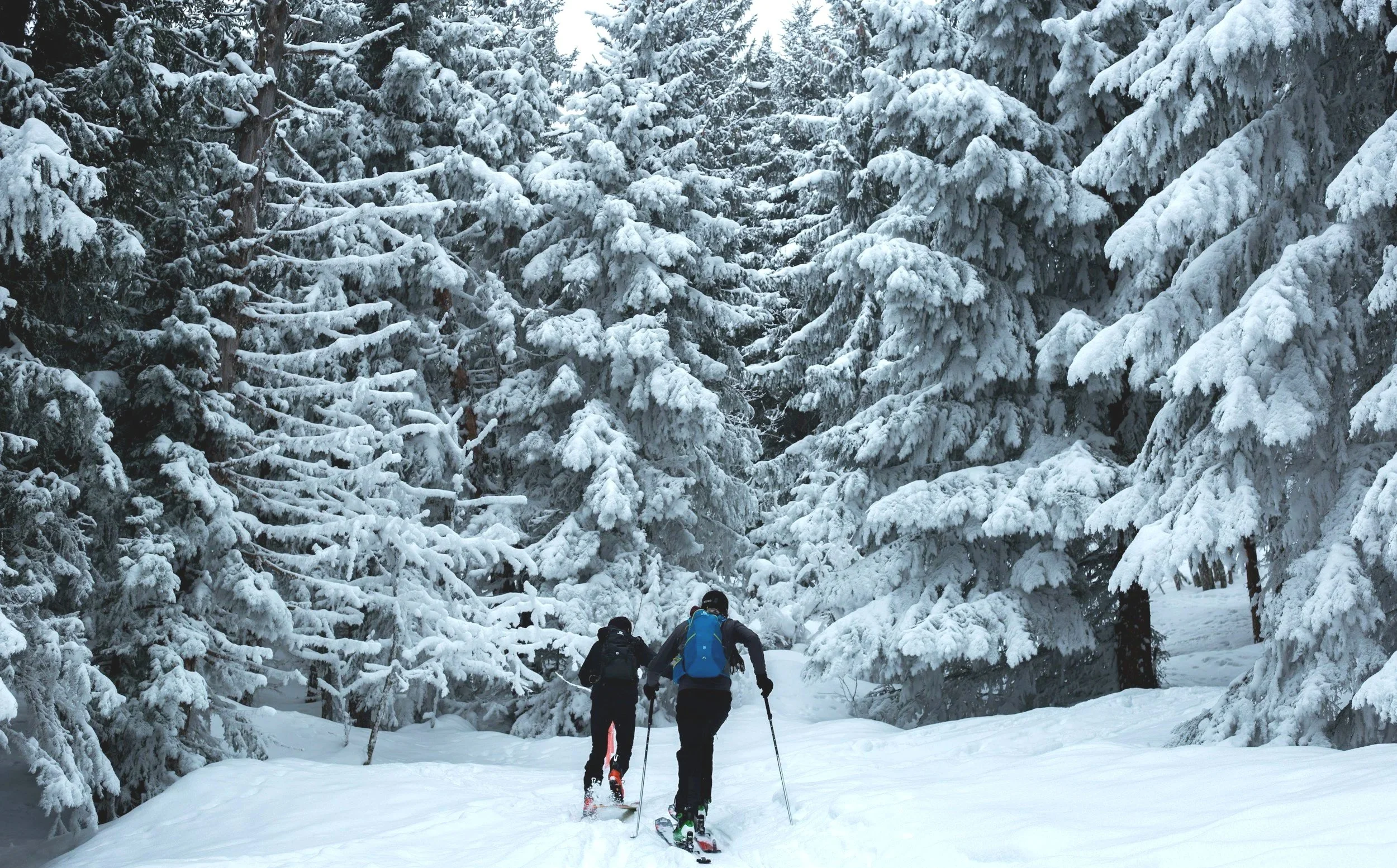
Dig out your hiking maps to check these out. Some intermediate options in the Adirondack Park include skiing the roads up mountains such as Prospect Mtn. in Lake George and Whiteface Mountain in the Adirondacks. There are also intermediate trails around the Adirondack Loj, North Creek Ski Bowl and Garnet Hill/Siamese Pond Wilderness Trails, and the Pharaoh Lakes. The Botheration Pond Loop bordering Garnet Hill is a famous intermediate ski while the Ramer Brook Trail at North Creek, Hoffman's Notch near Schroon Lake, and most all sections of the Northville Placid Trail are wonderful places to ski.
The Jack Rabbit Trail between Keene and Saranac Lake has a mix of beginner and intermediate trails, as well as the more advanced section over The Haystack/McKenzie col. Another classic is to start at the intersection of the Noonmark trail and ski down towards the Adirondack Mountain Reserve (AMR). Also check out the Scott's Cobble community trails across from Cascade.
If you’re expert, you can ski some of the high peaks in the Adirondacks such as Marcy and Wright, but the classic routes are the Whale's Tail and Avalanche Pass ski trails. Whale's Tail starts from the Algonquin Trail, crosses the notch between Whale's Tail and Wright, and exits behind the lean-tos at Marcy Dam. The Avalanche ski trail leaves from Avalanche Camps, gains the pass, and returns the same way. For the adventurous, Bennie's Brook slide is a green to blue trail but with a longer approach and day long commitment.
There is also a nice trail that leaves from just below the Tabletop trail intersection, rejoining the Van Hoevenberg trail for a great ski past the Phelps trailhead and down to Marcy Dam.
Berkshires and Taconics
Many backcountry skiers love the abandoned ski areas including Dutch Hill, Berkshire Snowbasin, the Williams College Ski run on Berlin Mountain, and Petersburgh Pass. These “Holy Grail” Trails are unmaintained, sometimes overgrown and often have good deep snow. On Greylock, the Thunderbolt Trail is kept open by a local group called the Thunderbolt Ski Runners, a local nonprofit and has been preserving and restoring this historic run which was first cut in 1935. Also popular for backcountry skiing on Greylock is the Bellows Pipe Trail.
Berkshire Natural Resources Council offers miles of backcountry trails through Berkshire County. Check their website at www.bnrc.org. Some of the more famous, advanced Intermediate and advanced backcountry options include all the glades off of the Taconic Crest Trail. You likely won’t find anyone up there in mid-winter.
Head east of Bennington just over the Mass border to enjoy some of the backcountry at Prospect Mountain, where soups in the lodge reward you for climbing up their summit Mountain Trail.
If you don’t want to travel very far, head over to do an off-piste run down Umbrella Hill in Kennedy Park, where the south-facing slope often forms a crust if the sun comes out.
Western Mass Backcountry Alliance has a whole webpage dedicated to backcountry skiing in Beartown State Forest. Beartown Backcountry is a partnership between WMass Backcountry Alliance (WMBA) and the MA Department of Conservation and Recreation (DCR). This unique winter recreation area, located entirely within the Beartown State Forest, offers runs, some of them really steep, that once were downhill slopes at the former Beartown Ski Resort in South Lee. https://www.wmassbcalliance.org/beartown-state-forest
Cautions & Tips:
One might be inclined to break one or more of these, but just be safe out there. Remember, avalanches occur in the Adirondacks, spruce traps exist at elevation, and hypothermia sets in fast.
Don't ski alone; there's safety in numbers.
Bring extra layers, carry food and water and maybe an emergency blanket.
Be realistic about your skiing abilities and stay within your comfort zone where there's less margin for error.
Be aware of weather, trail hazards, and snow conditions. Don’t head out with a high wind or heavy snow forecast like our recent storms have had and consider that in general you're safer if you can see the tips of your skis.
Connecting with other backcountry skiers:
There are a few backcountry skiing Facebook Groups covering for our region, but here are two that may be helpful.
Skin and Ski, Albany New York, Backcountry Club
Backcountry Touring in the Northeast
So gear up with what you have and start off on some backcountry trails this winter. You certainly have plenty of snow that should last well into spring and have fun accumulating your own “stash” of hidden woodland wonders.
Many thanks for the contributions for this article from Tom Hart in the Adirondacks, Steve Siegard and Jim Daus in the Capital District, and Steve Alsdorf in the Berkshires.
SPRING GATHERING - 2026: Save the date! Our Spring Gathering will be at Grafton Lakes State Park on Saturday, June 20. We have the Deer Field Pavilion reserved for the day. There are great hiking and paddling opportunities as well as time to socialize! More details to follow.
OUTINGS: Refer to the THC website outings page for details about the outings and how to register. We schedule on a monthly and short-term basis, so check the website periodically.
Wednesday, March 18: Valentino Family Community Forest B-
Wednesday, March 25: Moreau Lake State Park B-
Wednesday, April 1: Yokun Ridge South Loop from Olivia’s Overlook B-
QUOTE: “It was one of those March days when the sun shown hot and the wind blows cold, when summer is in the light and winter is in the shade.” Charles Dickens
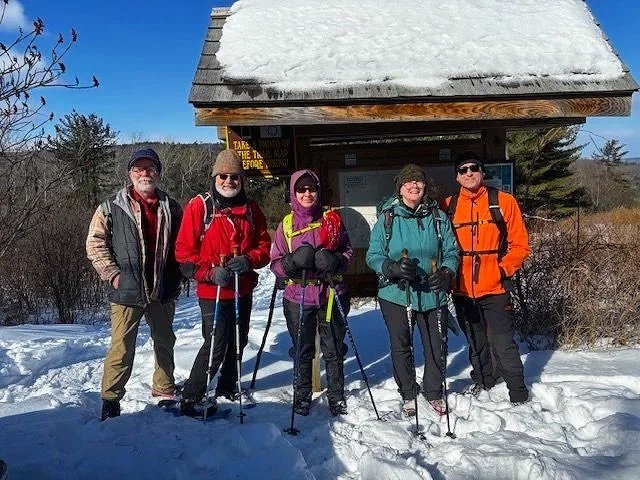
Plotterkill hike, pic by S Jordan
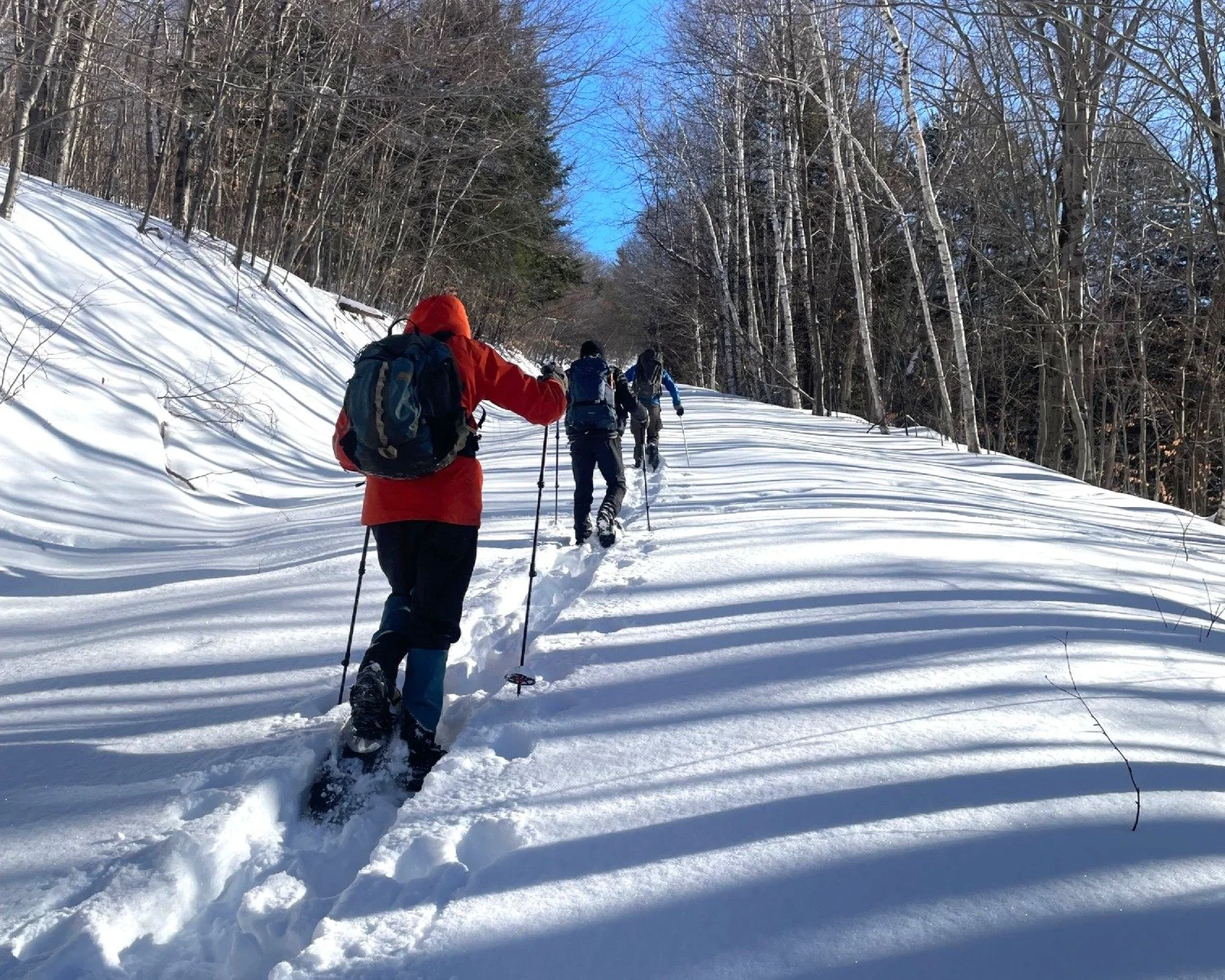
Robinson Hollow Trail, pic by D Pisaneschi
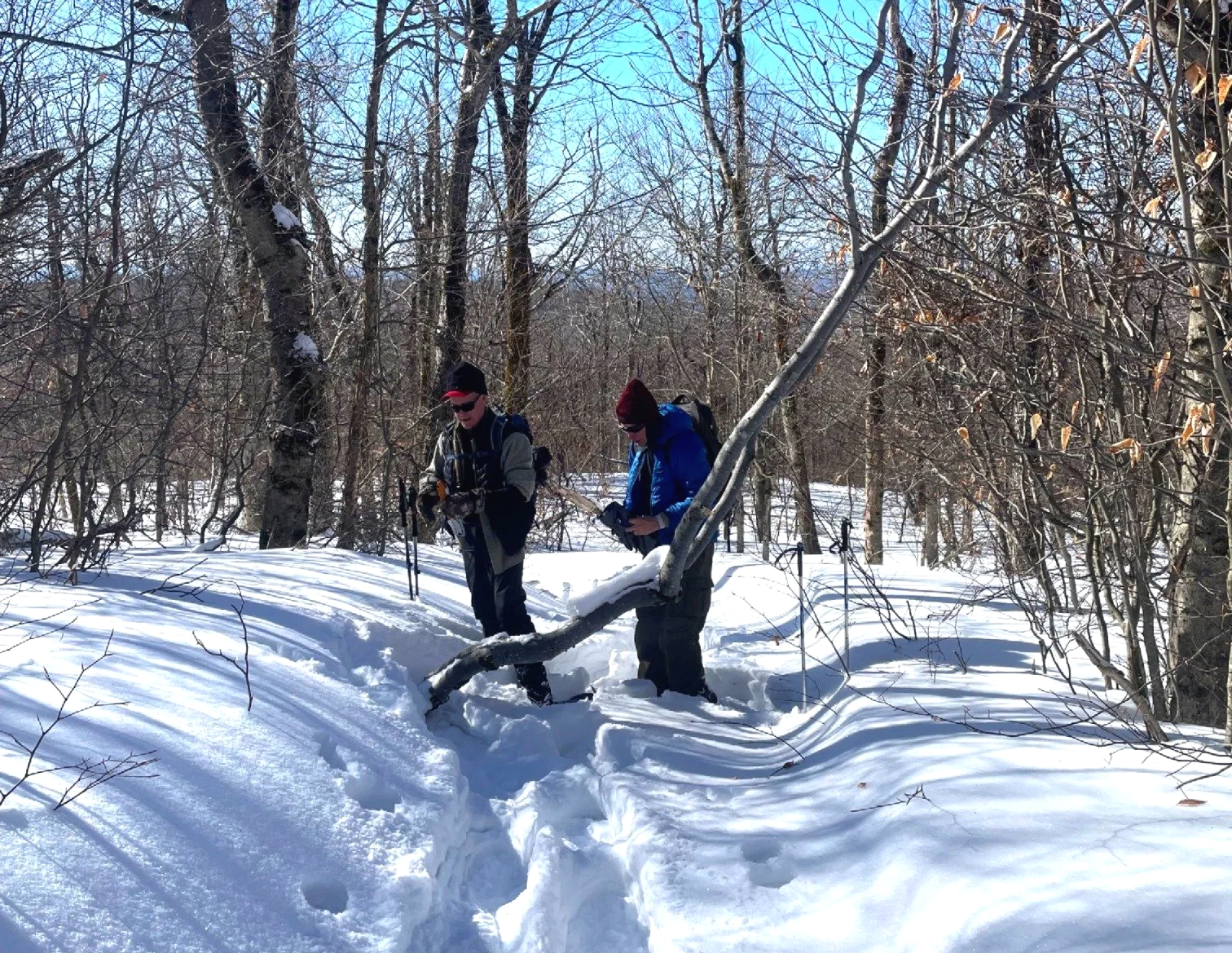
Blowdown removal, two feet of snow won’t stop these guys! Pic by D Pisaneschi
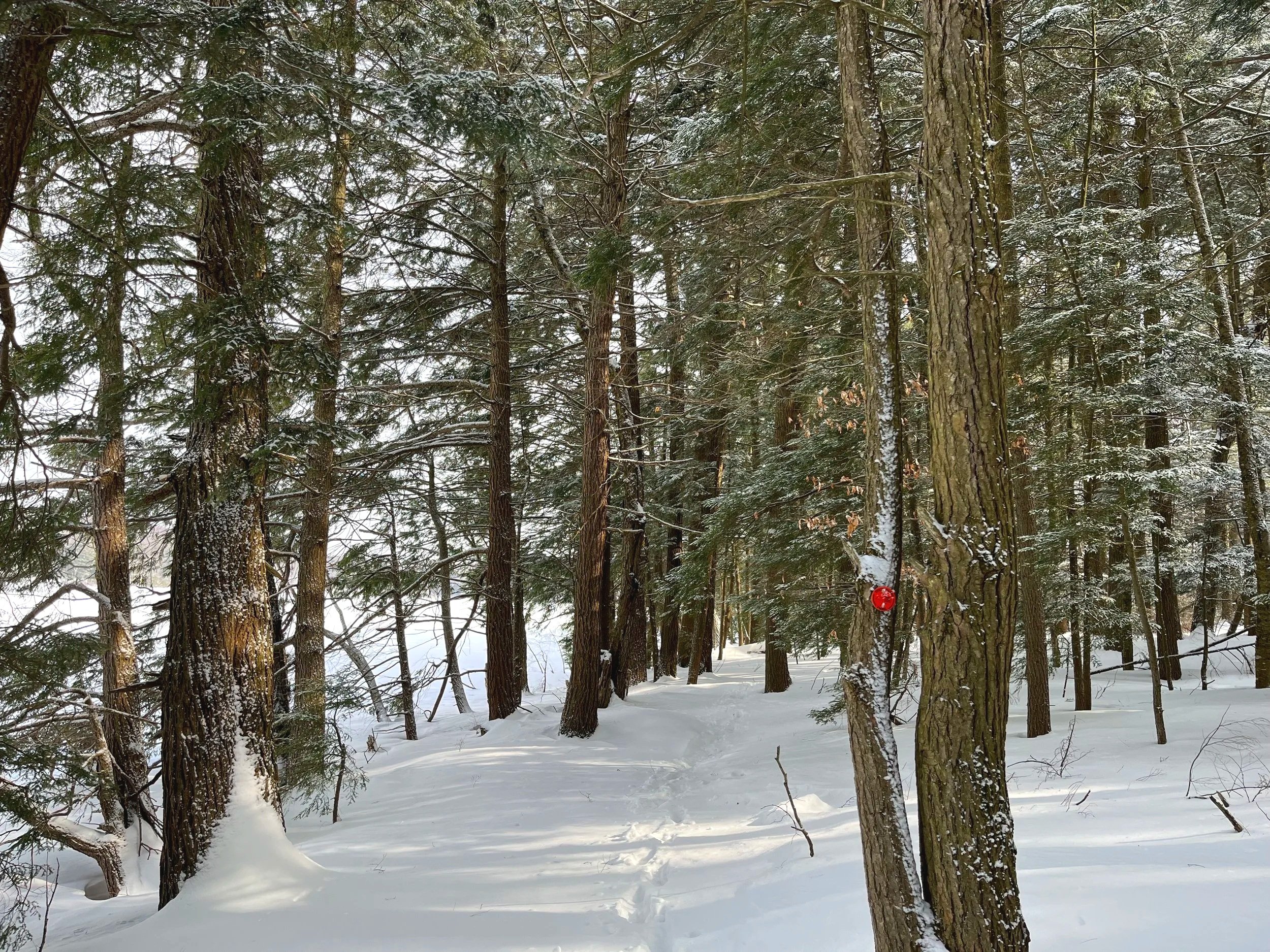
GLSP, Long Pond Trail, pic by M Waldman
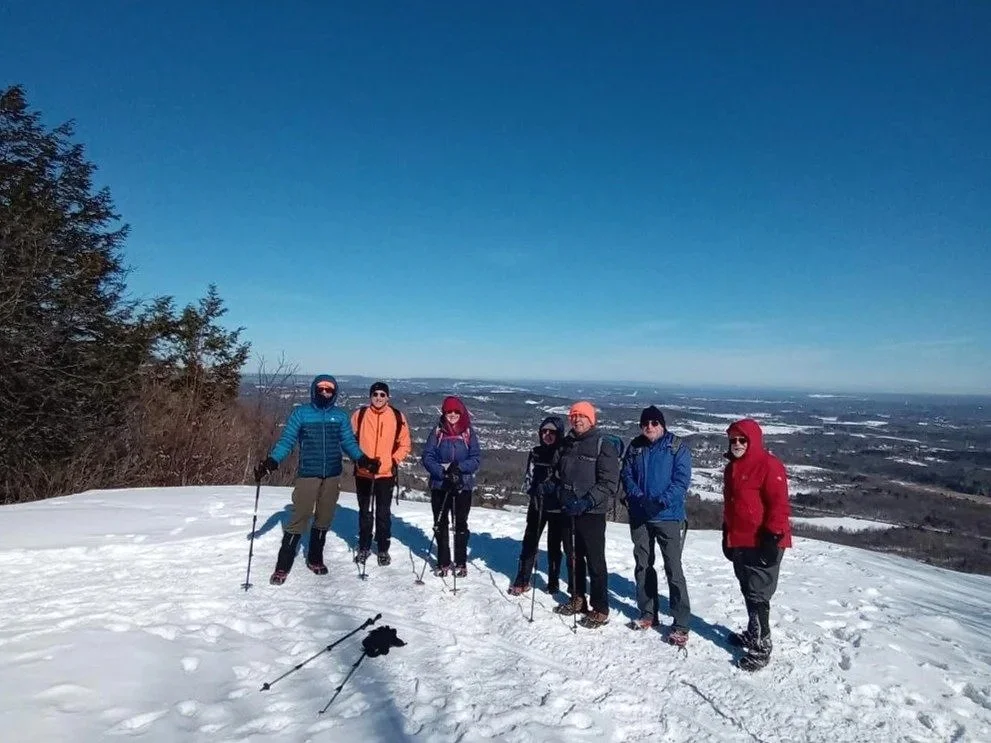
Hang Glider Overlook, pic by B Lamdman
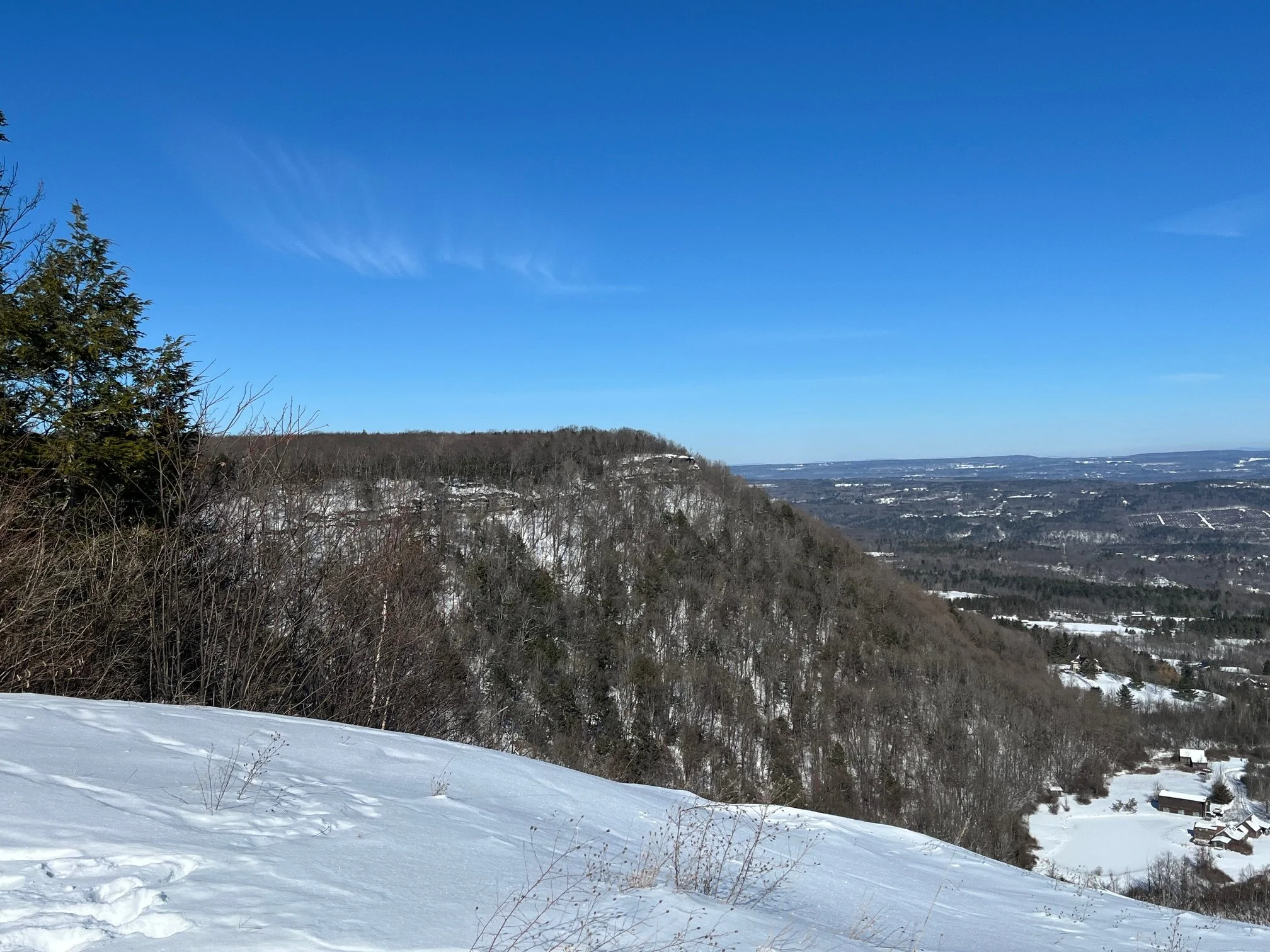
High Point from Hang Glider, Thacher Park