February Newsletter 2026
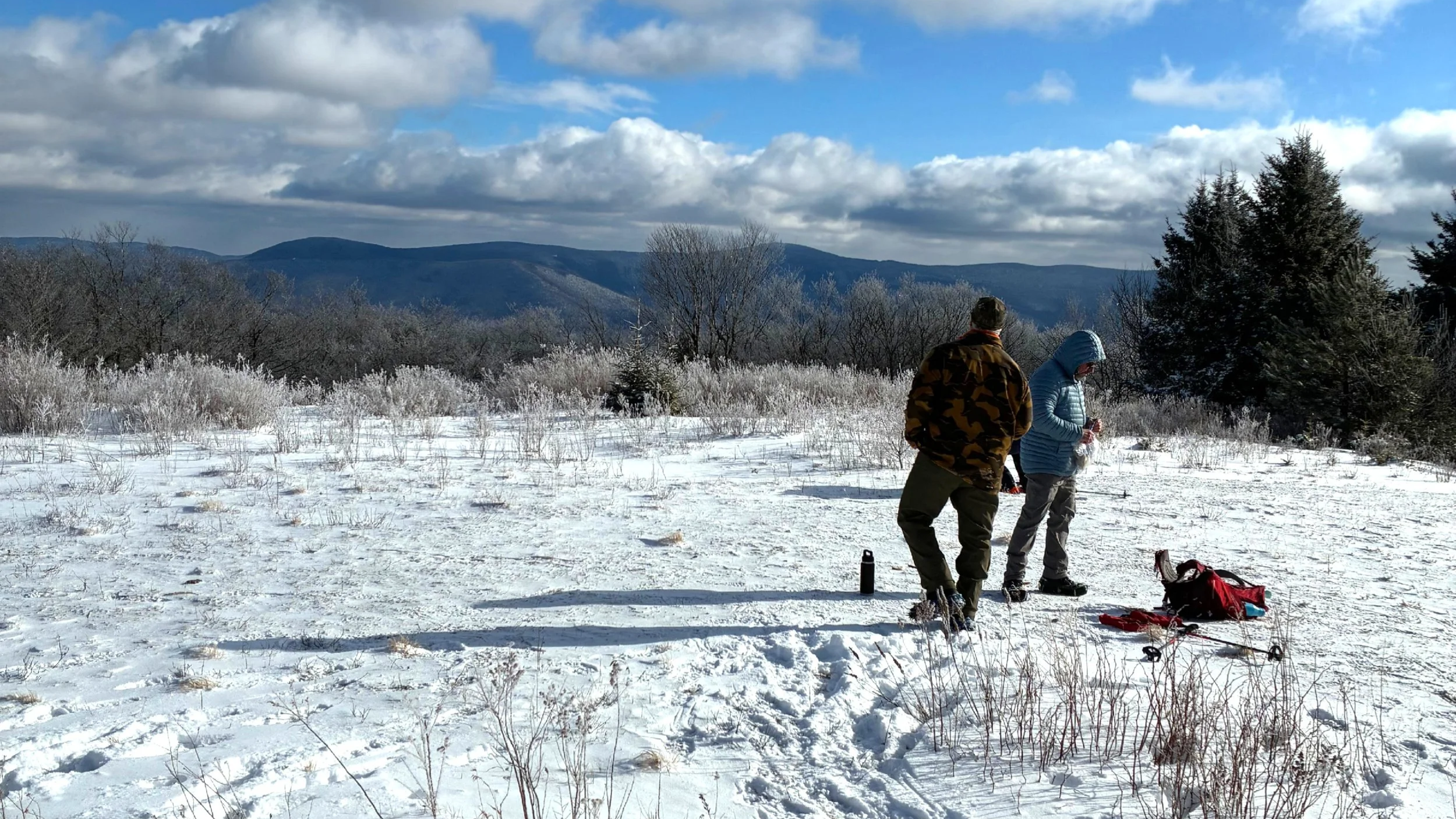
Berlin summit, view of Greylock Range, pic by D Pisaneschi
END-TO-END CHALLENGE REGISTRATION: Registration for the May 9, 2026, End-to-End Challenge opens March 1, 2026 at 7 AM. The online link to registration via Eventbrite will be on the THC End-to-End page. Mark your calendars!
Participants will hike 30+ miles, with over 7000 feet of cumulative elevation gain over undulating terrain, on the Taconic Crest Trail from Berry Pond in Pittsfield State Forest to the northern end of the Taconic Crest Trail at Route 346 in one day. Obviously, this challenge is for very fit and experienced hikers! Hikers are supported from beginning to end by volunteers of the Taconic Hiking Club. See the End-to-End Challenge page of the THC website for more details. To volunteer email: taconichikingclb@gmail.com (no “u” in club.)
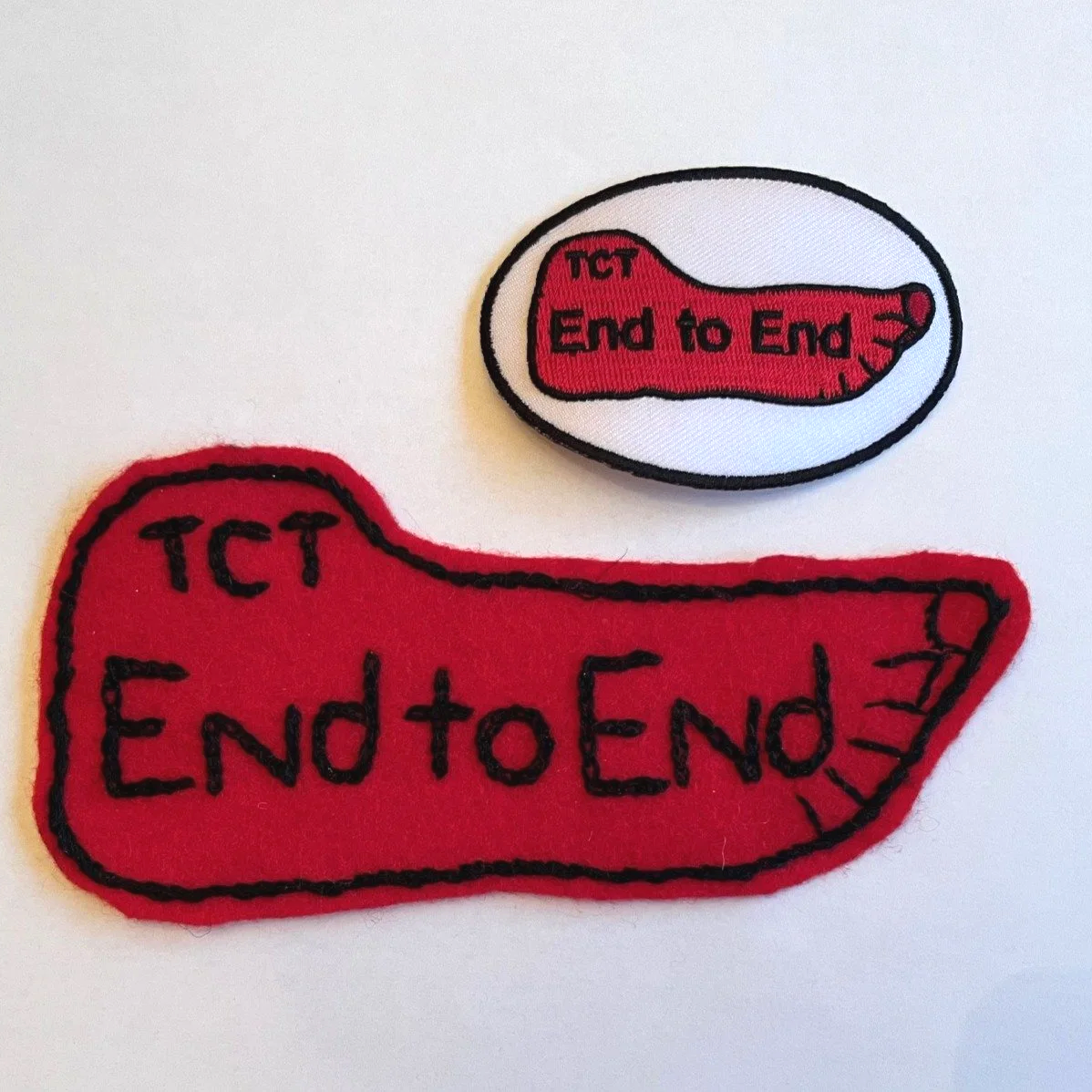
Original patch on bottom, current patch on top
WHAT IS THE BLOODY FOOT PATCH? All participants who complete the End-to-End Challenge are awarded an End-to-End One Day Challenge Patch; club members that finish also receive a coveted Bloody Foot Patch.
When the first Challenge was held in 1966 members completing the Challenge were awarded the “Order of the Hot Foot” badge in addition to the End-to-End One Day Challenge patch. The “Order of the Hot Foot” badge was named in reference to muscle aches. It was originally a large, handmade, red felt patch, made in the shape of a foot, approximately 6 inches long. The edges and text were all embroidered by hand . Just try to find a volunteer to do that today! The patch was also known as and is currently called the “Bloody Foot” patch in reference to blisters. In 2015 the “Bloody Foot” patches were commercially made for the first time. Any of this year’s participants can easily become members for if they want this patch: click here Membership — Taconic Hiking Club
THE HOPKINS MEMORIAL FOREST CANOPY WALKWAY
In recent years, books such as Peter Wohleben’s The Hidden Life of Trees have explored the interconnectedness of life below the forest floor. These discoveries often focus on the role of fungus as a vital link between trees in a woodland. However, what do we know about trees from the ground up? It is common knowledge that a tree trunk is mostly composed of non-living material and that the active, living part resides in the thin layer beneath the bark. At ground level, our eyes can follow the vertical path of a tree’s structure from the trunk to the branches and on to nature’s efficient solar collectors, the leaves. According to Dr. Meg Lowman, a noted field biologist who explores the forest canopy, examining a tree from ground level is shortsighted. She likens it to a medical checkup where the doctor only looks at the patient’s big toe.
Lowman’s canopy research has taken her to forests around the globe. By the time she assumed a professorship at Williams College in the early 1990’s, she had developed an effective but time-consuming method of pursuing her studies: find a suitable tree limb, use a slingshot to put a line over it, and then rig a series of ropes to haul herself skyward. Using this cumbersome approach, she was able earn her PhD by studying life in the Australian rainforest canopy. This method has obvious drawbacks. The upper levels of a forest are beyond most ladders, and the laborious line system must be set up for each visit to the treetops. What was needed was a way to establish a fixed structure that would allow easy access to the treetops without requiring the skills of a mountain climber.
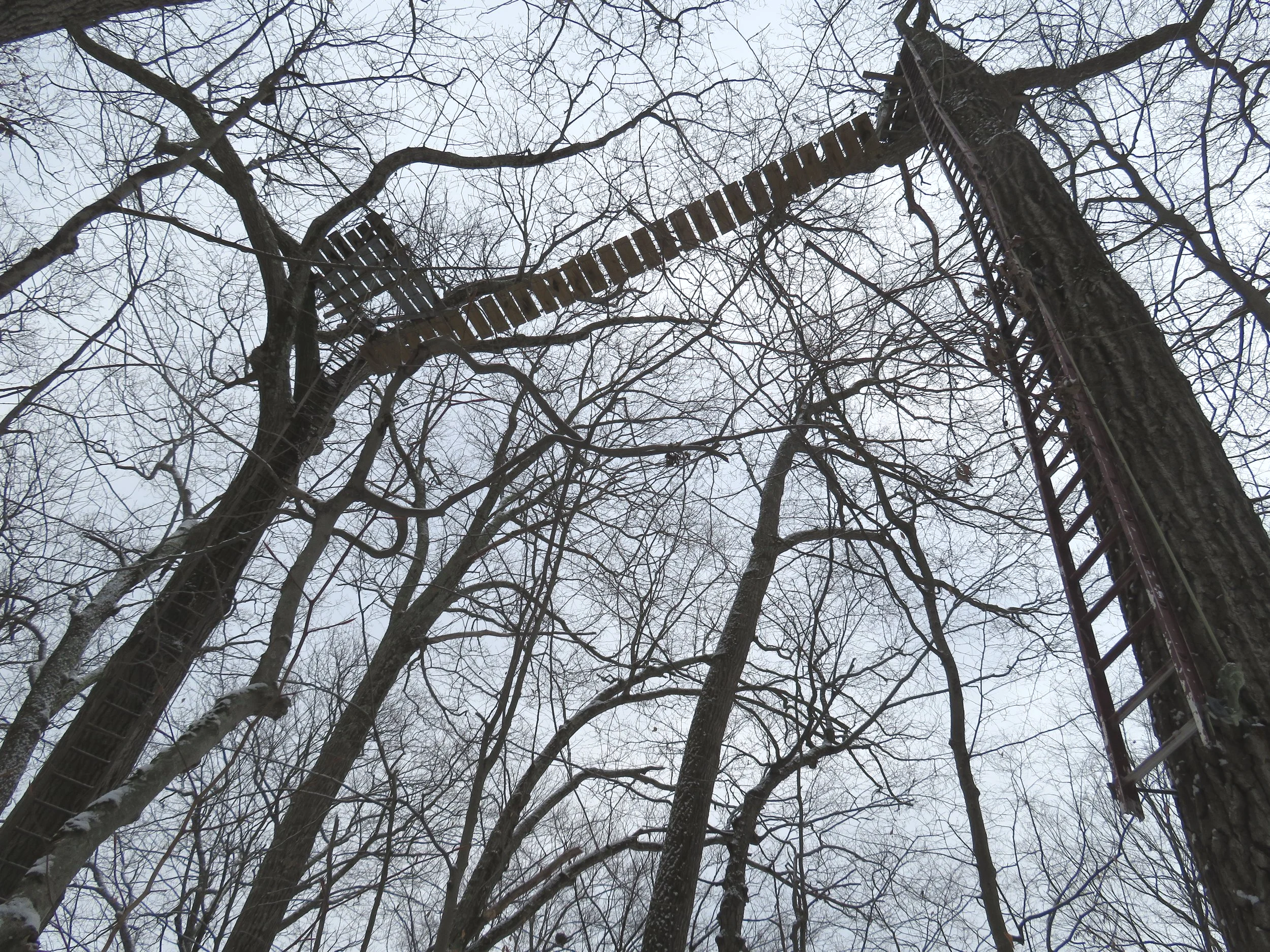
The “highway to heaven” as it appears today.
Pic by C. Prewencki
Lowman’s elegant solution was to construct a canopy walkway between two trees in the Hopkins Memorial Forest (HMF). This would allow researchers to safely explore the forest treetops. She and local arborist Bart Bouricious created a modular system of platforms and bridges that could be used at HMF and elsewhere. Completed in May 1991, the 25-foot walkway was strung between two red oaks at a height of 75 feet. It was the first structure of its type in the western hemisphere. Its construction was enabled by a small grant of $2500 and a great deal of free student labor. Lowman’s fragile catwalk allowed her students to conduct world-class research, one that yielded immediate results. She called it her “highway to heaven.”
Special traps set by the students quickly revealed the presence of white-footed mice and flying squirrels, the latter being a natural predator of the destructive spongy (formerly gypsy) moth. Indeed, their research confirmed that the moth pupae were more prevalent on the ground than in the canopy. Little was known about flying squirrels in northern Massachusetts, and the canopy research at Hopkins also led to the discovery that southern flying squirrels were in the area as well.
You can find more information on the walkway’s genesis and Lowman’s time at HMF in Life in the Treetops: Adventures of a Woman in Field Biology. New Haven: Yale University Press, 1999. For a more thorough account of her work and career, I recommend The Arbornaut: A life Discovering the Eighth Continent in the Trees Above Us. New York: Picador, 2021.
For those interested in seeing Lowman’s canopy walkway, we are fortunate that Hopkins’s deciduous forest is largely leafless in winter. Once the trees have leafed out in spring, the walkway is nearly invisible. From the Hopkins Rosenburg Center, proceed north on the lower loop trail for about four tenths of a mile until you see the descriptive panel on the right side of the road. The walkway is about 20 yards from the sign.
According to the HMF website: “Access to the platforms is via tree-mounted ladders. The use of standard issue safety equipment and trained guides (for visiting groups) is required. Anyone interested in using the walkway for academic purposes or arranging a group visit should contact the Forest Manager.” By: Cliff Prewencki
RENEW YOUR MEMBERSHIP now for 2026, click here Membership — Taconic Hiking Club to pay on-line or by mail. If you have already renewed in the past 3- 4 months - THANK YOU!
SPRING GATHERING - 2026: Save the date! Our Spring Gathering will be at Grafton Lakes State Park on Saturday, June 20. We have the Deer Field Pavilion reserved for the day. There are great hiking and paddling opportunities as well as time to socialize! More details to follow.
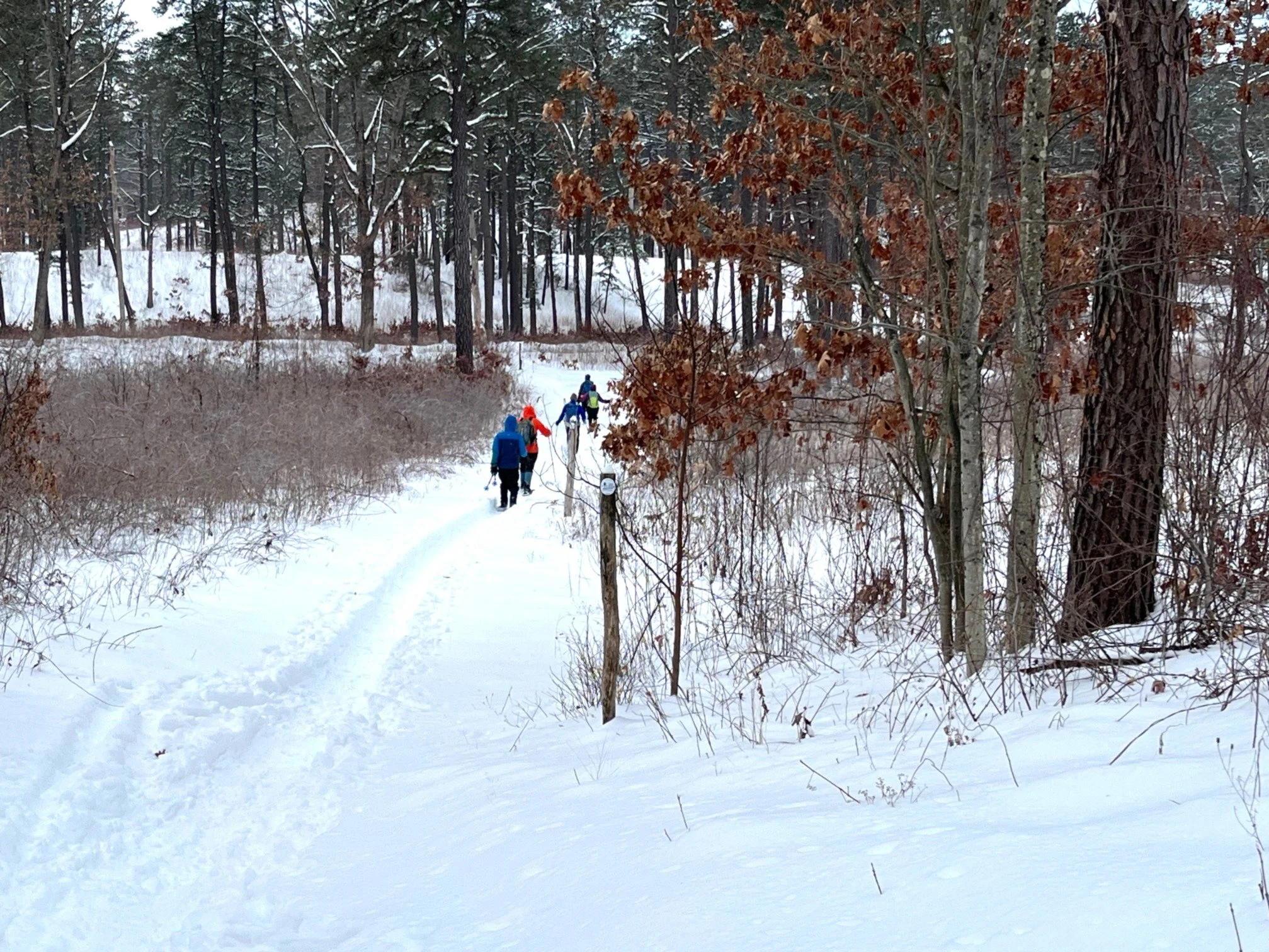
First snowshoe of the year, Albany Pine Bush, pic by M Waldman
OUTINGS: Refer to the THC website outings page for details about the outings and how to register. We schedule on a monthly and short-term basis, so check the website periodically.
Wednesday, February 4: Plotterkill Preserve B-/B
Friday, February 13: Thacher State Park, Pear Orchard to Hang Glider B-
Wednesday, February 25: Grafton Lakes State Park, Mill Pond to Lily Pond B-/B
QUOTE: “A snowflake is winter’s butterfly.” — Unknown
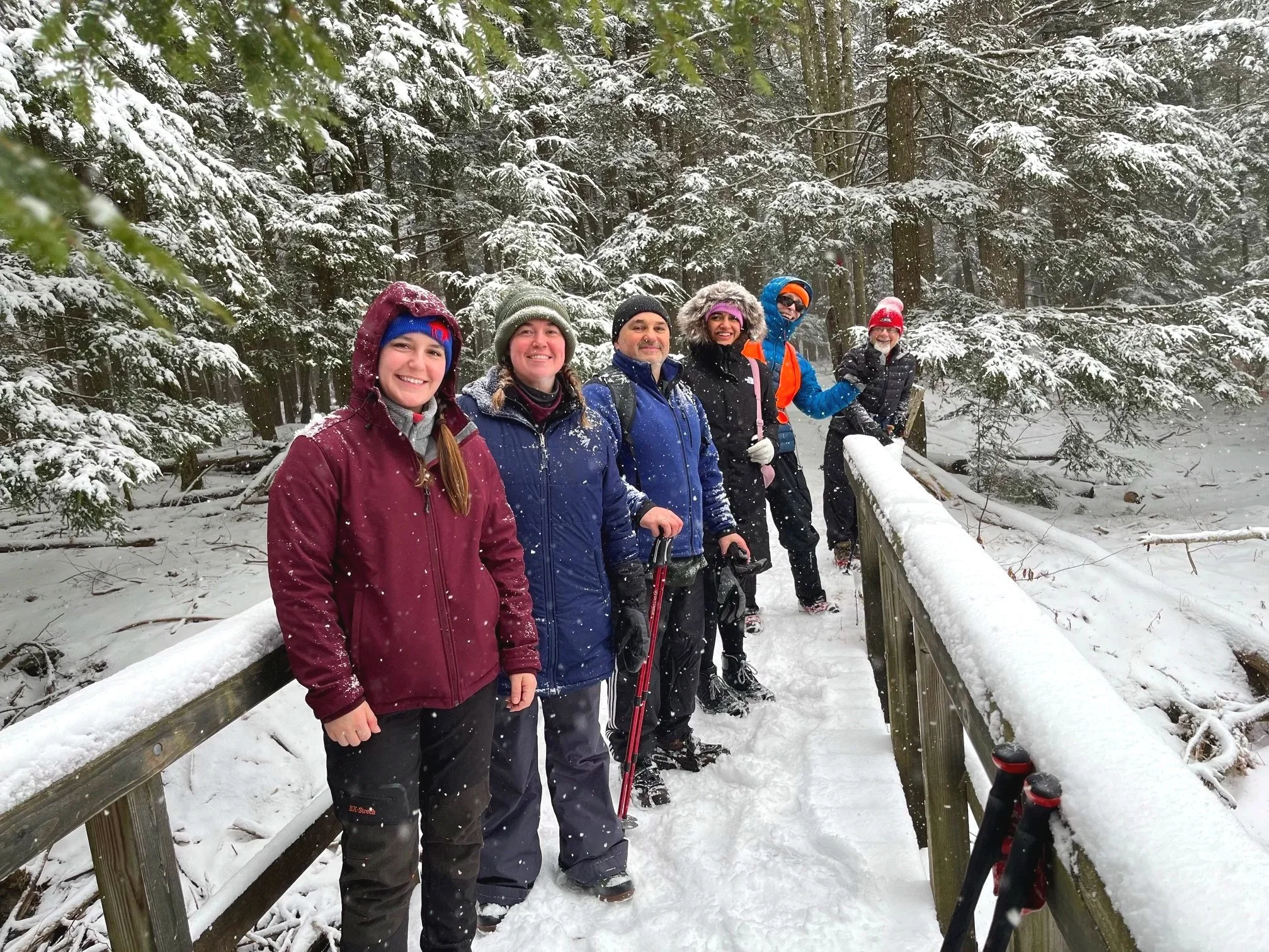
THC Grafton Lakes State Park Winterfest Hike, pic by M. Waldman
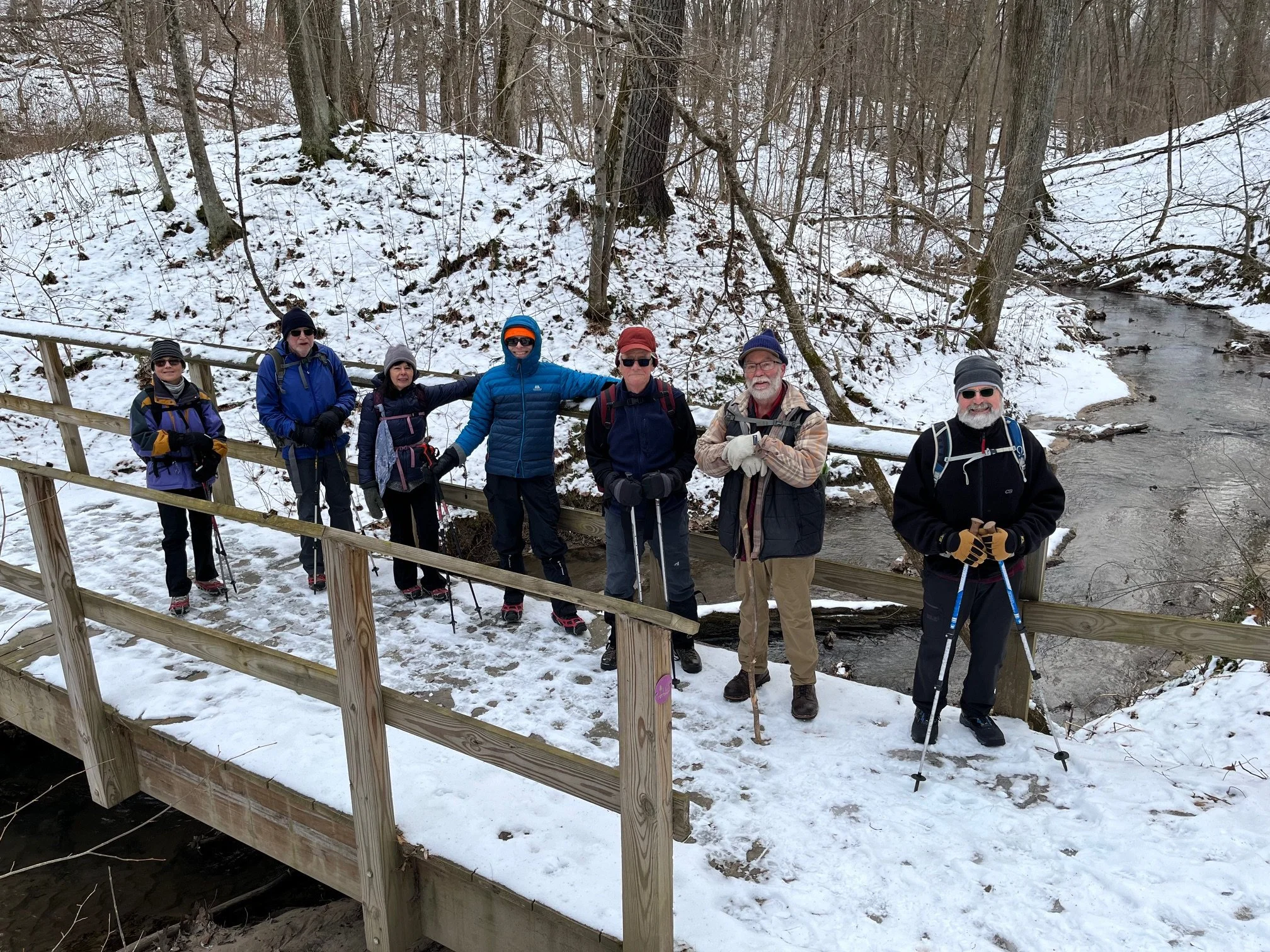
Hungerkill, Pine Bush Preserve, pic by M Waldman
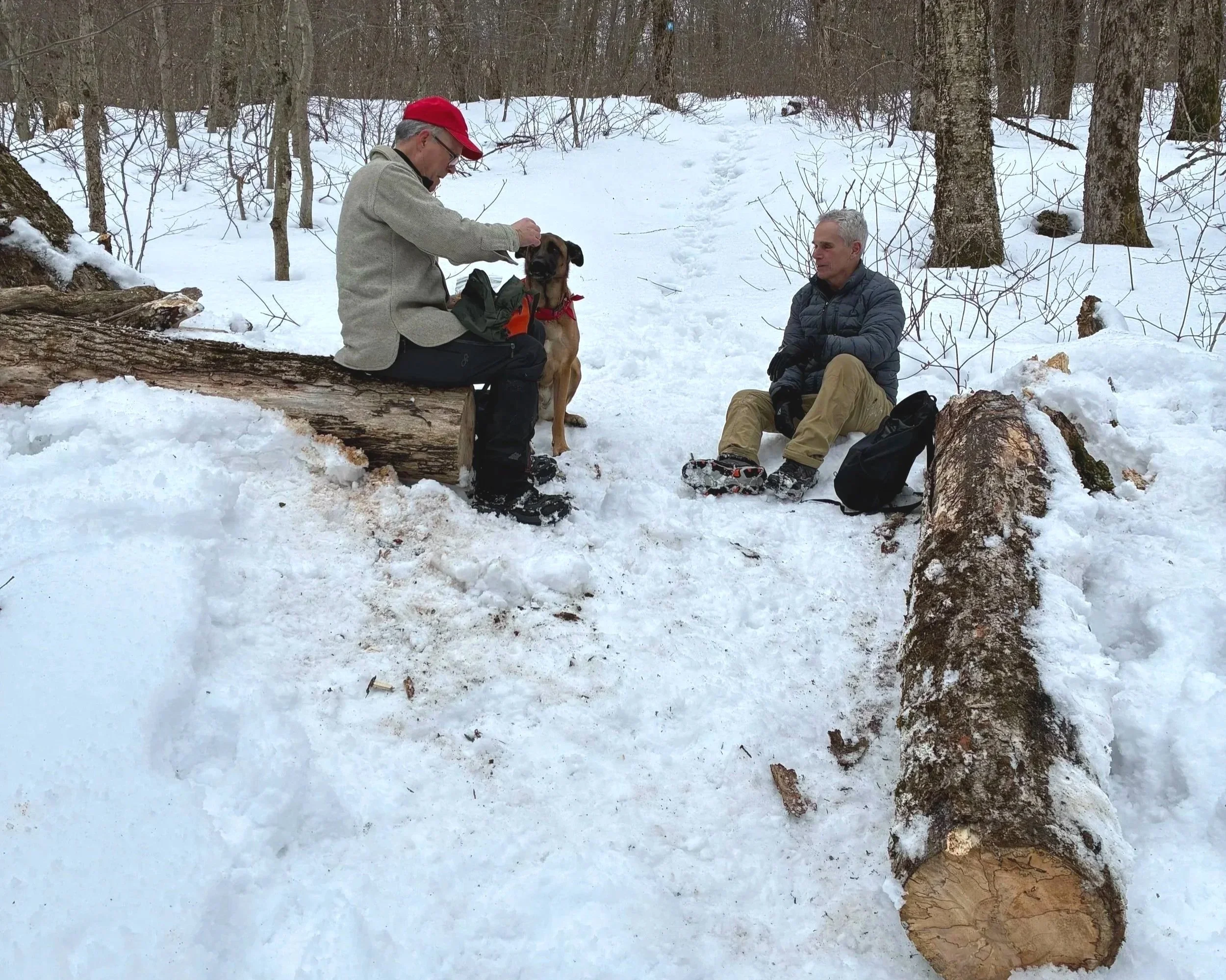
Trail work in January, a Silky saw and some muscle work was took care of this tree trunk! Pic by D Pisaneschi
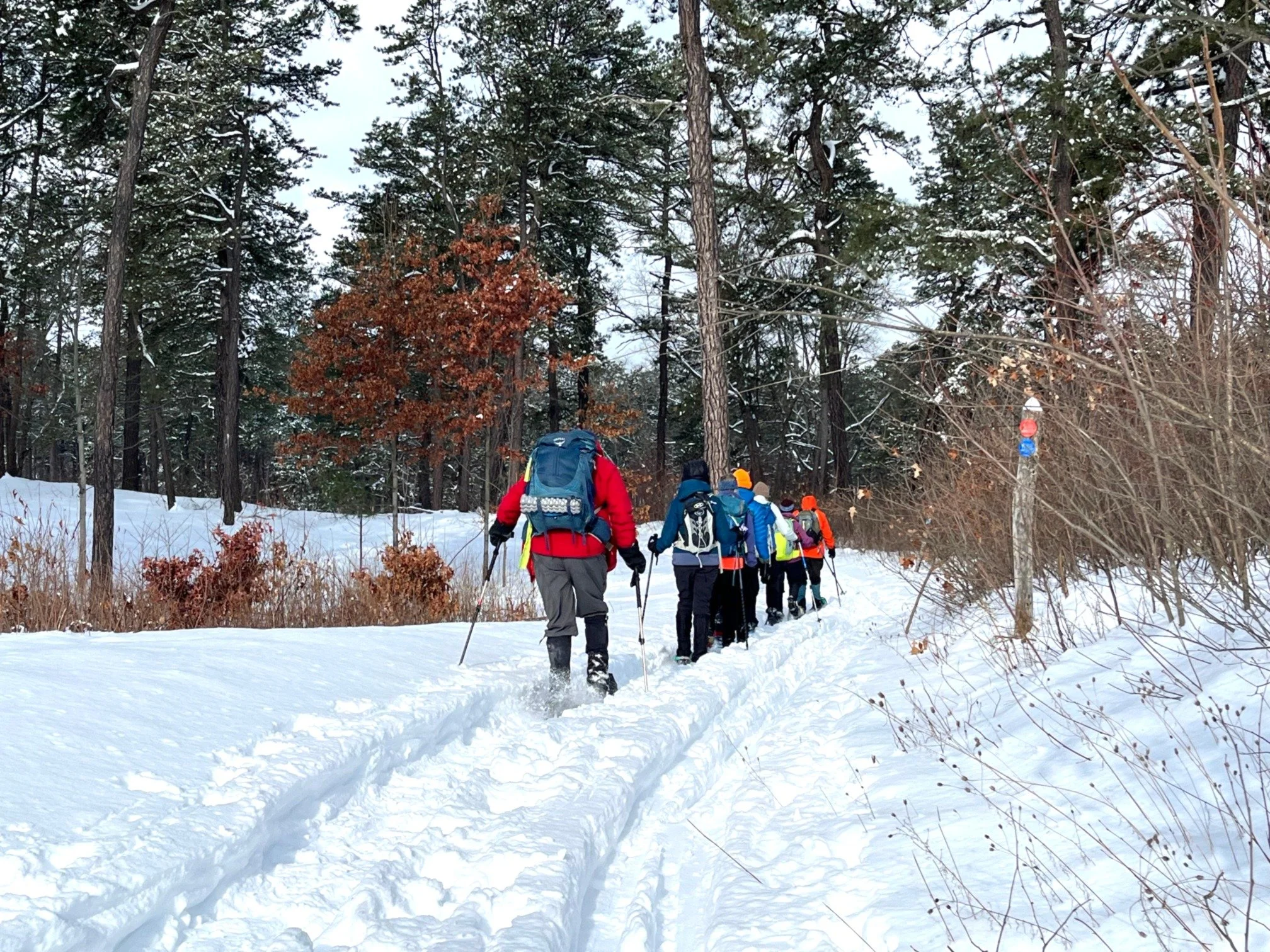
Great Dune trail, Pine Bush Preserve, pic by M Waldman
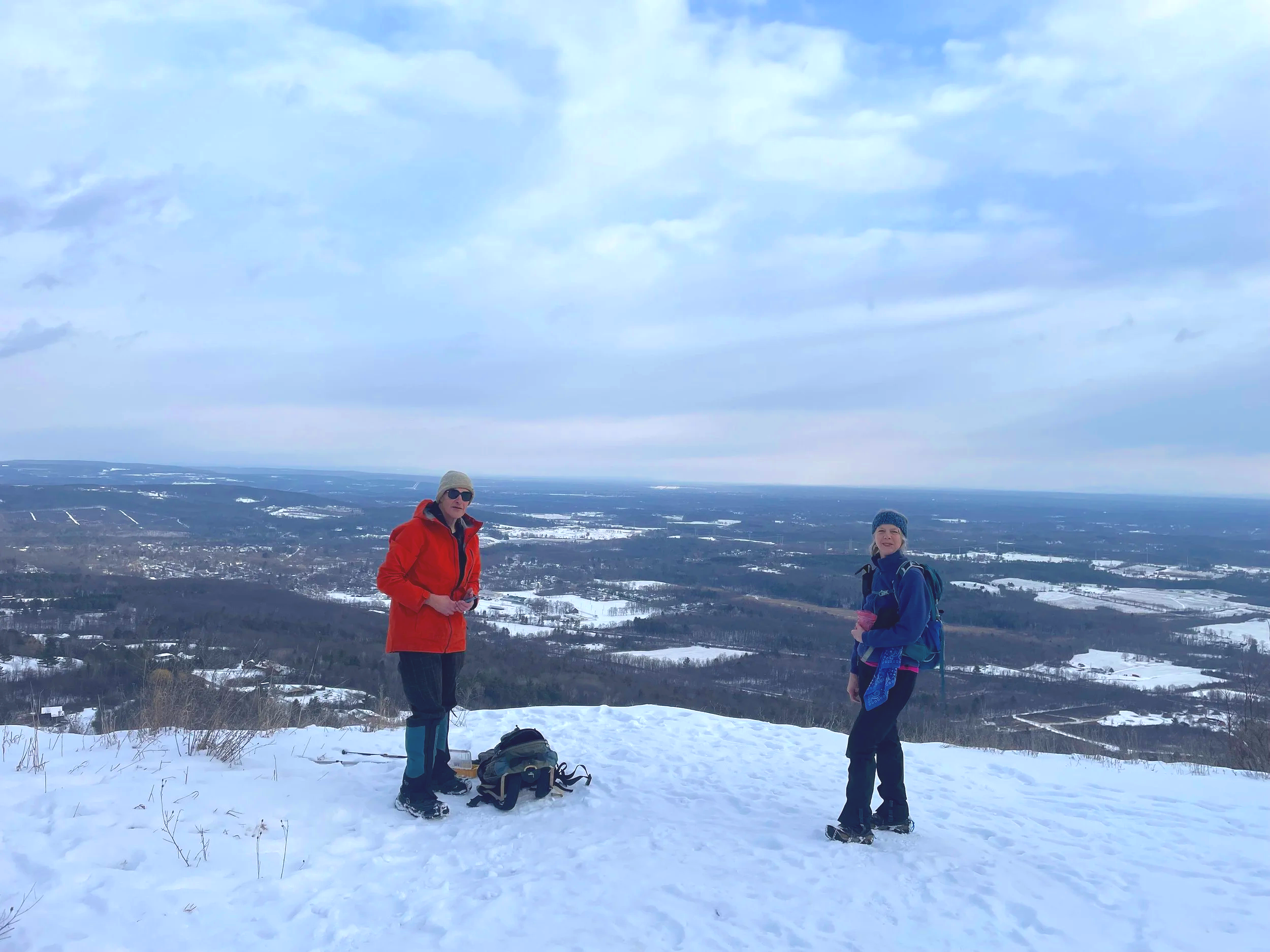
Hang Glider viewpoint, Thacher Park, pic by C Mulvihill
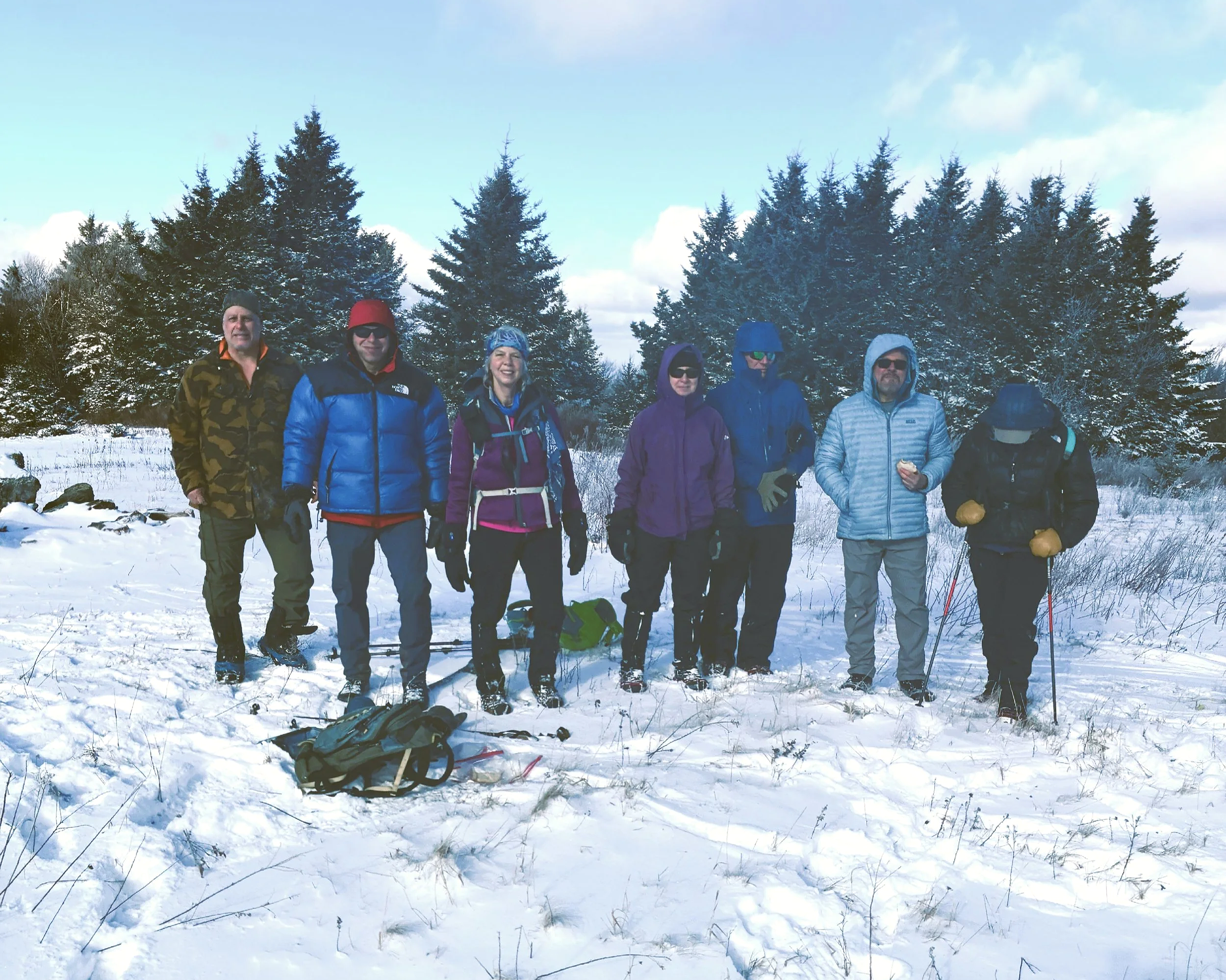
Berlin summit, pic by d Pisaneschi